

Vellano borgo delle Dieci Castella della Valleriana
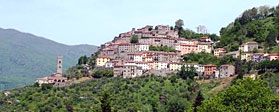
VELLANO It is the capital of the Pescia mountains, located 480 meters above sea level and is a predominantly summer tourist resort with excellent guesthouses and well-equipped holiday homes. The town was already known in the 10th century for its parish church and the nearby hamlet called "Obaca." In 1281, its fortress and walls were destroyed by the Guelphs of Lucca and Valdinievole. It was a fiefdom of the Garzoni family of Pescia and was part of the League of Castles of Valdinievole. In 1366, Coluccio Salutati, who was the town's notary, wrote the statute, which is still preserved in the Pescia Municipal Library.
How to see in Vellano:
In the upper part of the village, you can admire the remains of the pyramid-shaped fortress and the surrounding walls. In the lower part, instead, you can admire the bell tower and Pieve dei Santi Sisto e MartinoBuilt outside the castle walls along the mule track connecting to Calamari, known as Via Grande or Via delle Fabbrichine (so named after the women who walked it to go to work in the factory). The parish church (Pieve), possibly dating back to the 10th century, was restored in 1774, which inverted the position of the apse and the main entrance portal. Featuring a Romanesque layout, it has three naves.
The battlemented bell tower was originally a watchtower. The 18th-century loggia offers a stunning panoramic view over the valley. Beneath the parish church lies the crypt, which houses the stone-carved, now weathered statues of Saints Peter and Paul, along with an ancient Benedictine cross. The external lunette featuring Saints Sixtus and Martin dates back to 1654. The interior preserves numerous artworks: a 15th-century fresco depicting the Martyrdom of Pope Saint Sixtus, and a 15th-century baptismal font crafted from pietra serena.
Two canvases by Father Alberico Carlini from Vellano, dating back to the 1700s (Our Lady of Sorrows with Saints and The Trinity with Saints); the 1600s canvas The Supper at Emmaus; the 17th-century panel painting The Crucifix by Rodomonte Pieri from Vellano; two 17th-century canvases by Alessandro Bardelli from Uzzano (both depicting The Madonna and Child with Saints); the 17th-century canvas Saint Francis Receiving the Stigmata; the 17th-century canvas Saint Anthony of Padua in Adoration by Benedetto Orsi from Pescia; the 17th-century canvas Our Lady of the Rosary and Saints by Spinamonte Vanni from Vellano; five statues, including three wooden ones from the 15th century and two in glazed terracotta from the 16th century; the Tronci organ dates back to 1795 (cit. Alessandro Birindelli).
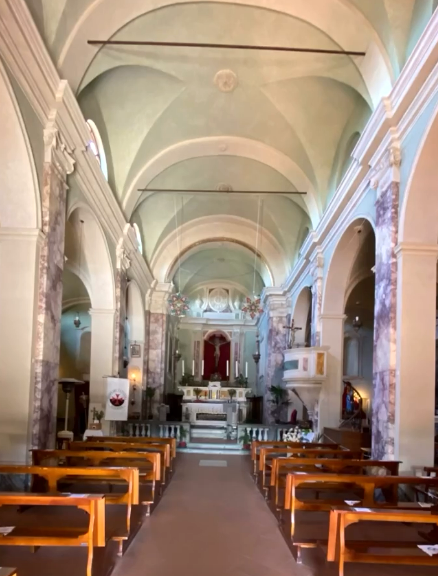
Interno a tre navate 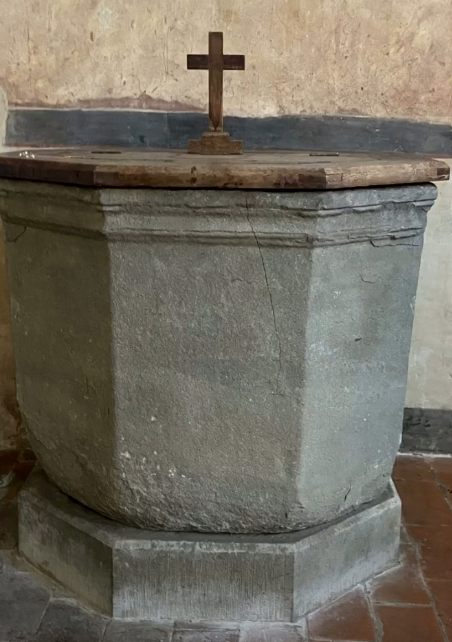
Fonte battesimale sec XV arte toscana in pietra serena 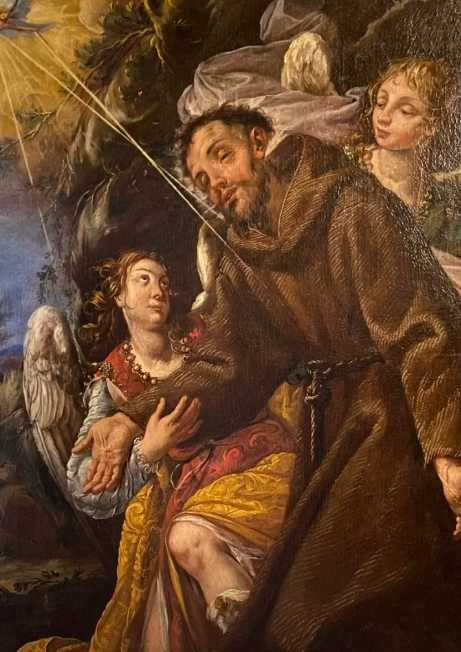
San Francesco d’Assisi metà sec XVII olio su tela 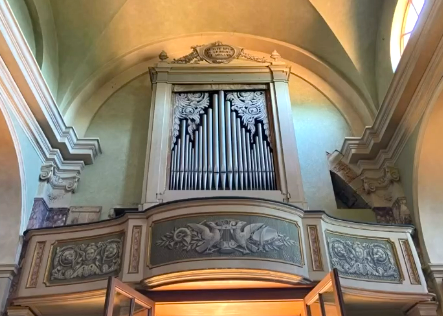
Cantoria sec XIX – Organo presente dal 1626 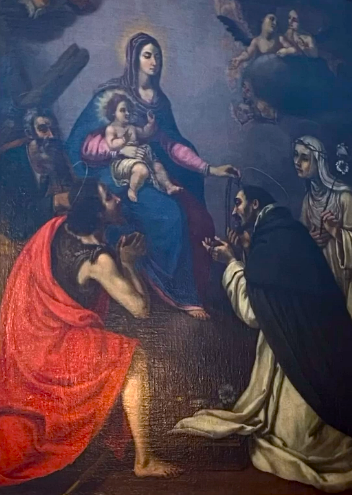
Madonna del Rosario primo quarto sec XVII di Pompeo Caccini olio su tela 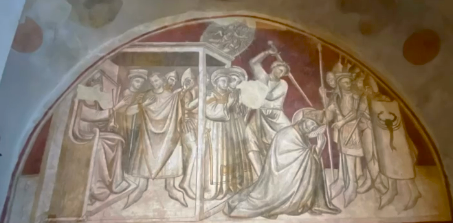
Martirio di San Sisto Papa metà sex XV affresco scuola toscana 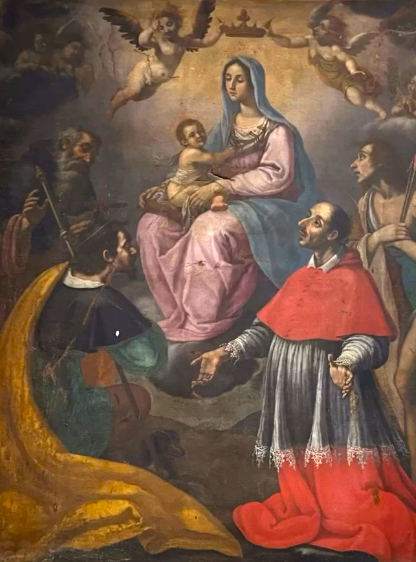
Madonna con Bambino prima metà sec XVII di Alessandro Bardelli olio su tela 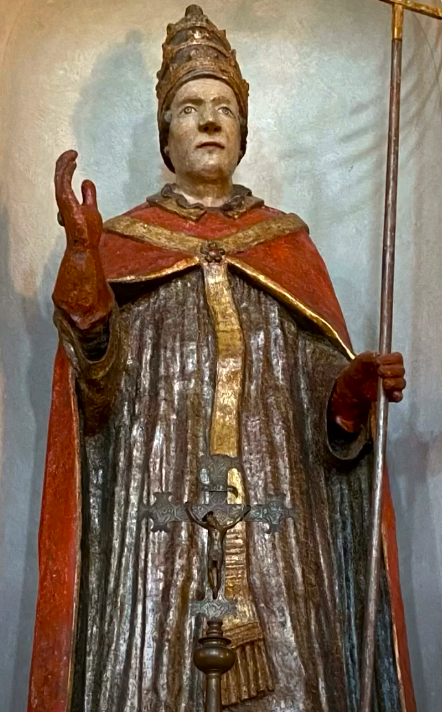
San Sisto Papa statua lignea sex XV 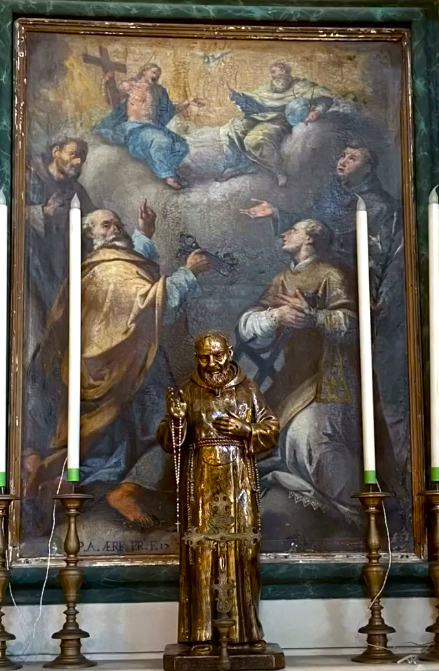
Trinità sec XVIII di Alberigo Carlini 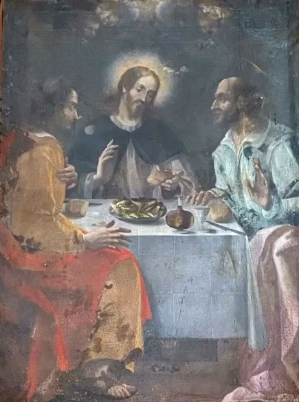
Cena in Emmaus metà sec XVII scuola toscana olio su tela 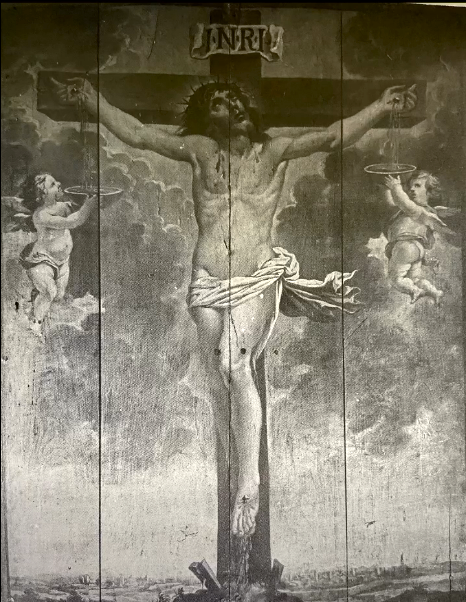
Crocifisso metà sec XVII di Rodomonte Pieri, olio su tavola 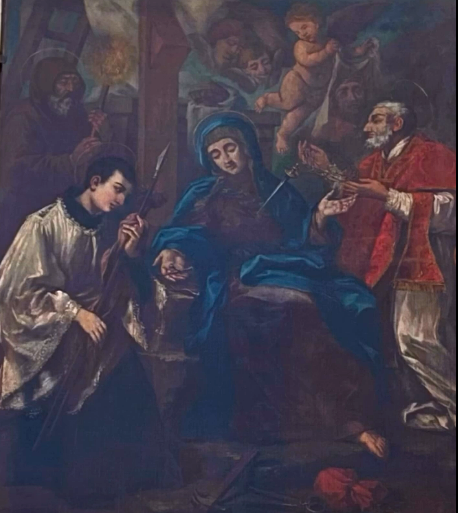
Madonna Addolorata sec XVIII di Alberigo Carlini 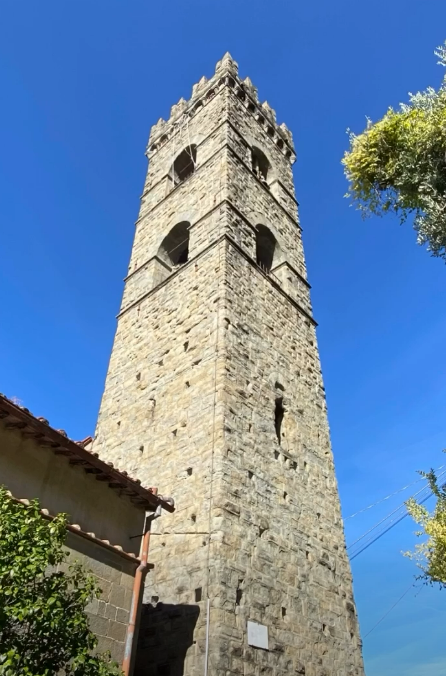
Il Campanile in origine torre di difesa e di avvistamento 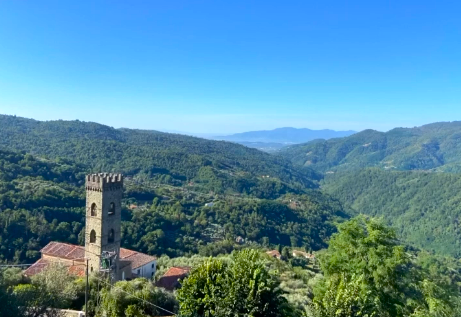
Panorama 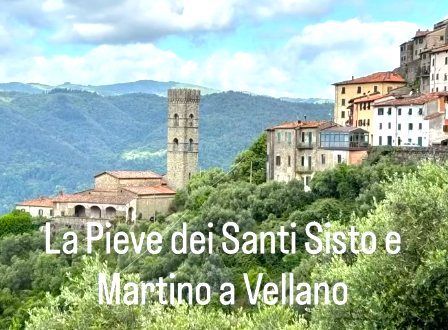
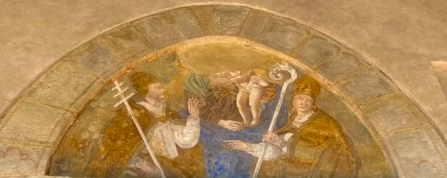
Madonna e Bambino affresco del 1654 scuola toscana – lunetta esterna
The Svizzera Pesciatina has represented an inexhaustible reserve of pietra serena, much like other Tuscan areas more commonly renowned for this production. This particular sandstone was deeply appreciated by the masters of the Renaissance, starting with Brunelleschi, who was the first to introduce it into architectural works. Currently, the last active extraction site in the area, the Nardini quarry, can be found in Vellano, which regularly opens its doors to visitors
For those wishing to explore the history of this craft, the Historical Ethnographic Museum of the Miner and Quarryman offers an in-depth journey. The site is also known as 'Miniera di Publio' (Publio's Mine), in honor of its founder, and houses a rich collection of professional tools, historical equipment, mineral specimens, books, and multimedia content.For guided tours, please contact: +39 330 910517Weekdays: 9:00 AM to 7:00 PMSaturdays and Sundays: By reservation onlyEmail: laminieradipublio@libero.it
Continuing along the Via Mammianese, among beautiful chestnut groves, you reach the Colle Romito plateau, where the hamlet of Macchino is located.