

Pietrabuona It is located 4 km from Pescia and was an independent municipality until 1775. Its upper part, "the Castle," still bears traces of the buildings that served as the primary defense of the entire mountain area during the battles between Florence and Pisa. The Via Mammianese, which connects our mountain to the Brennero state road, runs through the town. It can be considered the "gateway" to the valley.
It was an important center of the paper industry. In fact, here you will find the famous Paper Museum (or Museo della Carta)The Paper Processing Documentation Center collects all significant materials related to this field, documenting the techniques and production methods that have shaped the culture and history of this territory for centuries. Furthermore, one can visit the ancient Pescia paper mills, see period machinery that is still operational, as well as the equipment and tools used for papermaking.
At the highest point of Bicciuccolo, an ancient village was built, with a defensive wall and two entrance gates: the Northern or Bolognese Gate and the Southern or Florentine Gate (of which only a single jamb remains in the rock). The castle housed civil, military, and religious buildings; the streets within the village and those surrounding it were paved with stone.
From the ancient castle, one could dominate the Pescia valley and the access routes to Pietrabuona: an excellent vantage point to the south should Lucchese or Pisan troops approach. To the east, the castle of Vellano and the river below came into view; meanwhile, to the north and west, the gaze swept over Monte Gileta, Poggio Zano, Monte Telegrafo, and Poggio Romita. The Bicciuccolo castle was linked to Medicina, Fibbialla, and San Quirico via the mule track that passed through Case Quornia; some stretches of this ancient road are still passable today.
The village did not prove to be impregnable; in 1362, the Pisans and Lucchese conquered it from the Florentines using a massive mobile wooden tower equipped with a drawbridge lowered onto the surrounding walls. This event was recorded by Sercambi (1348–1424) in his book Le Croniche, illustrating the incident with a watercolor showing the castle fortified with two circuits of crenelated walls and soldiers bearing the banners of their respective cities. Following the peace treaty between Pisa and Florence, the latter regained control over Pietrabuona two years later.
The "Bicciuccolo" has an irregularly elliptical shape, and the road that completely encircles it—known as Via della Ruga, Via del Bicciuccolo, or Via del Fondaccio—begins at the Porta Bolognese and serves as a panoramic terrace. From the gate, Via del Campanile also begins, carving its way into the heart of the ancient village; after opening into a small square with a distinct medieval feel, it branches into two narrow alleys that both converge back into the Ruga: one to the west and the other to the east (the latter known as Via della Scaletta). Furthermore, two other roads originate from the Ruga: To the south, Via della Sacrestia Vecchia leads to the foot of the hill in Borgo La Croce or toward the "Le Carte" paper mill. To the north-west, Via del Cimitero.
During the Late Middle Ages, several buildings were constructed within the Castle of "Bicciuccolo":
-the ancient Parish Church of S. Matteo: located adjacent to the north gate and built between 900 and 1000 AD. Today, only the apse and parts of the perimeter walls remain. A defensive tower was constructed inside it during the 14th century when the religious building was converted into a Rocca (fortress) to protect the gate. At that time, religious functions were transferred to the Oratory of S. Michele, also located within the ancient village. A residential house was later built against the ruins of the fortress, which has remained unrestored since its collapse in 1970.
-The Oratory of S. Michele Arcangelo: religious services were transferred here from around 1350 until the end of the 1800s. Inside, there are 17th-century frescoes in a state of severe disrepair.
-The Hospital of S. Matteo: dating back to before 1450, it provided a straw bed with blankets for the poor and pilgrims.
-the Town Hall (Il Comune): an imposing palace featuring pietra serena stone arches, which served as the administrative seat of the "free commune" of Pietrabuona from 1200 onwards.
Situated at the summit of the Castle of Pietrabuona, nestled against the Rocca and the Bicciuccolo, stands the Church of SS. Matteo e Colombano. It is located in a large square that was once home to the Leopoldine Customs House of the Arco Vecchio, through which the roads to the mountains and the Lucca area passed. The Church, imposing and built in the shape of a Greek cross, is visible from afar and is devoid of external decorative elements. It was built by the architect Bernardino Bernardini from Pescia and was inaugurated in 1849. It is dedicated to Matthew, apostle and tax collector, and to Columbanus, an Irish monk from the 6th century. The original place of worship was the ancient Church of San Matteo, which was later transformed into a fortress (Rocca) and destroyed by the Lucchese and Pisans in 1362. This was then replaced by the Church of San Michele Arcangelo, located in the small square of the Bicciuccolo, and subsequently—due to population growth—by the current new church outside the walls. (Cit. Alessandro Birindelli)
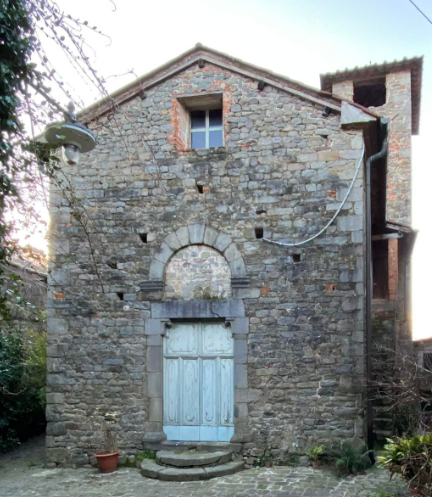
Chiesa di San Michele Arcangelo 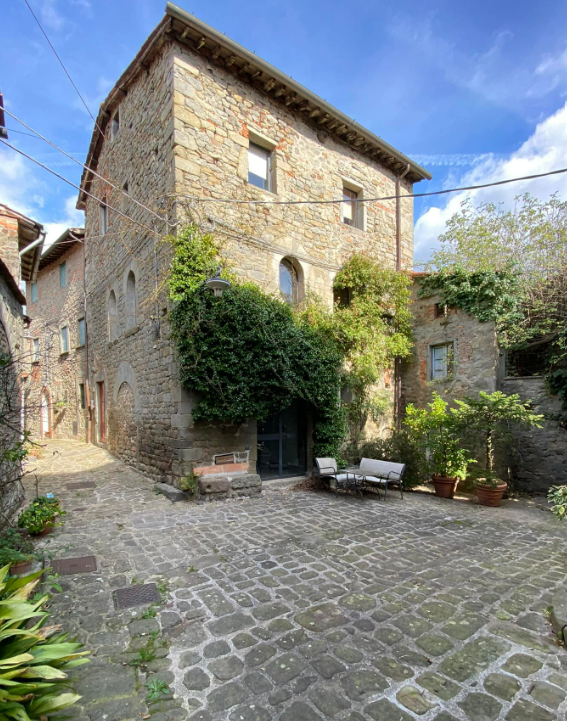
Palazzo Comunale 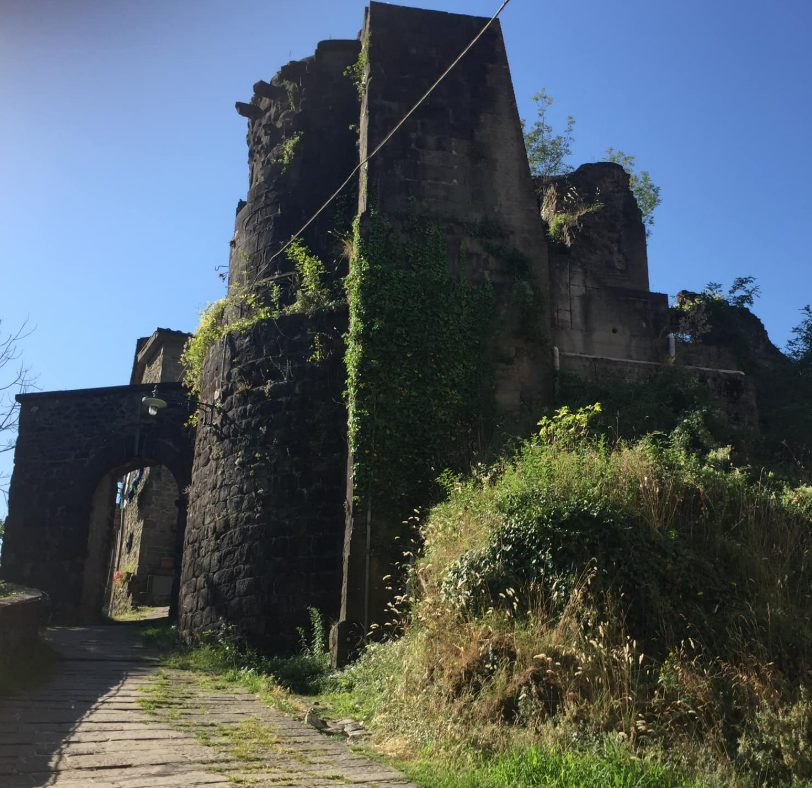
Rocca 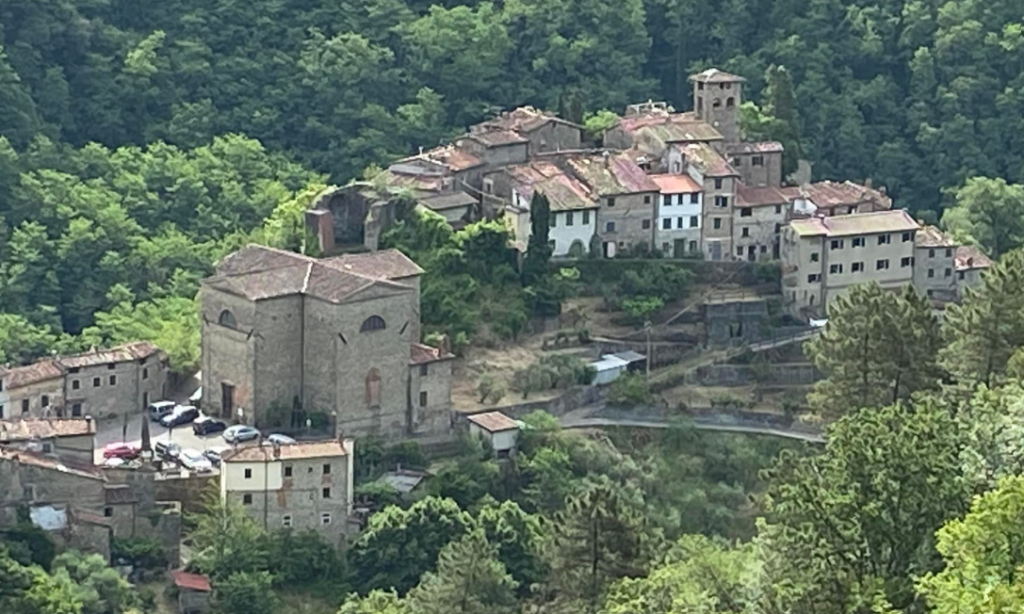
Panorama del Bicciuccolo