

Monte a Pescia is an ancient village, located at 319 meters above sea level, overlooking the Pescia River valley. A few houses perched on the hill constitute its center. Always a desirable and pleasant location, it was once chosen by many of the city's prominent families to build their homes. Some 19th-century local historians referred to it as the "Fiesole of the Pesciatini." The town, documented since 1237, was located along a major road for local traffic. From a military perspective, the village's position was also strategic: anyone intending to threaten the Bareglia fortress, the key to accessing the city, would have been spotted in time to prevent the attack.
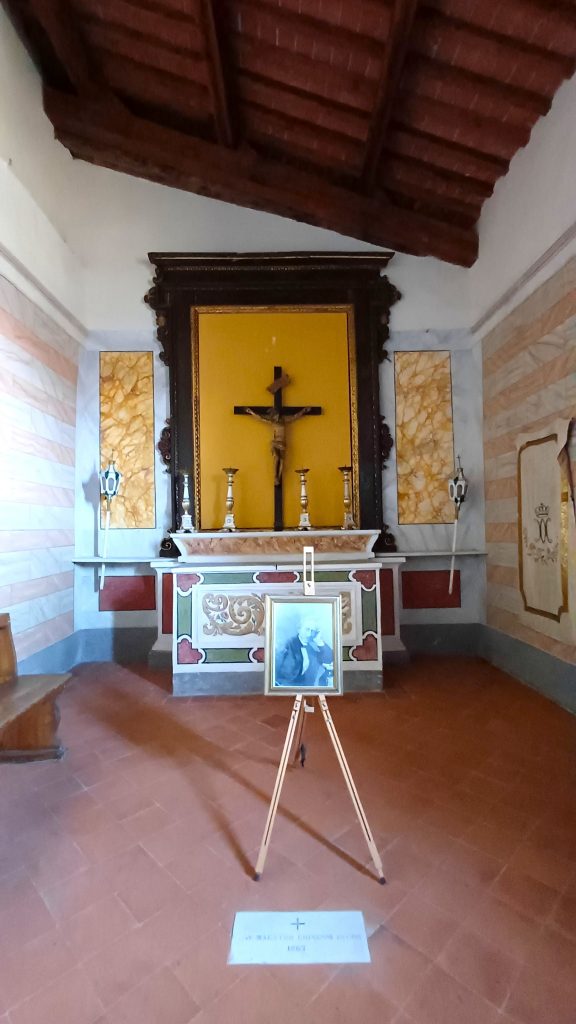
At the top of the hill we find the Romanesque-style rectory of Saints Bartholomew and Andrew and the adjacent building of the Compagnia dell'Opera di San Bartolomeo. The latter cannot be visited due to its precarious condition, despite consolidation work being carried out. The interior of the church is very simple in general style, with some Baroque elements. The remains of Maestro Giovanni Pacini (1796 – 1867), an opera composer, musician of great importance and a very prolific author, rest in the Chapel of the Compagnia di San Bartolomeo. The Teatro della Città di Pescia is named after him.
Church of St. Bartholomew and Andrew
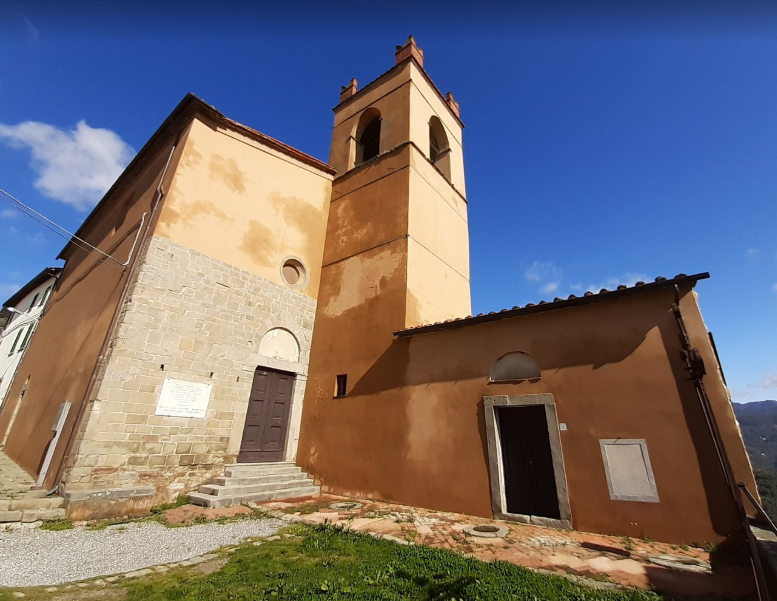
Built in Romanesque style, and recorded in the Valuation of the Diocese of Lucca from 1260 onwards, it was built over a pre-existing structure, likely an oratory or private chapel. The rectory has undergone numerous and significant renovations over the centuries.
Adjacent to the bell tower is the building of the Opera di San Bartolomeo company.
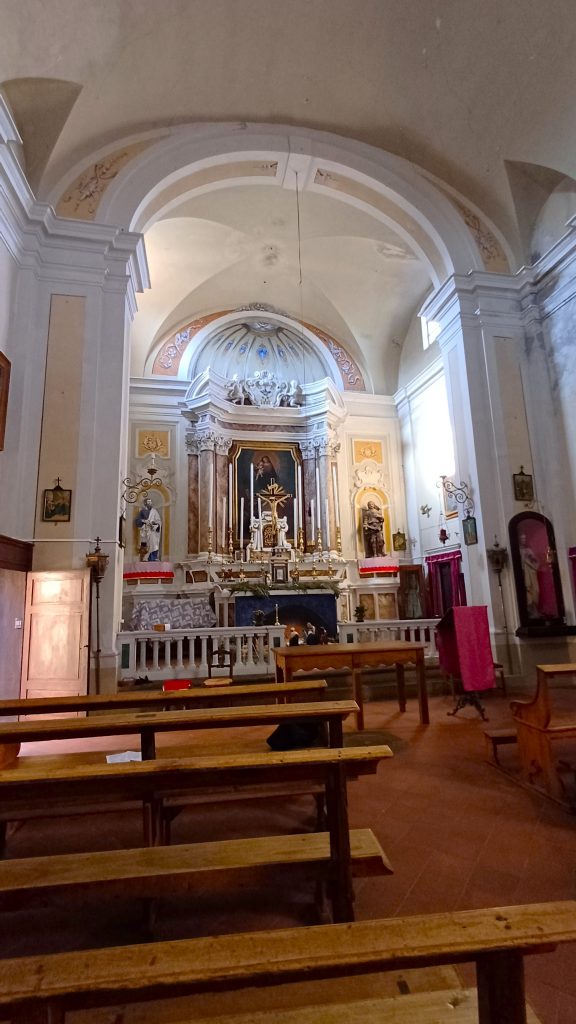
The interior of the church is simple with some Baroque elements. Upon entering, we are greeted by a single nave without an apse. The reliquary of the "Santa Spina" stands out on the high altar.
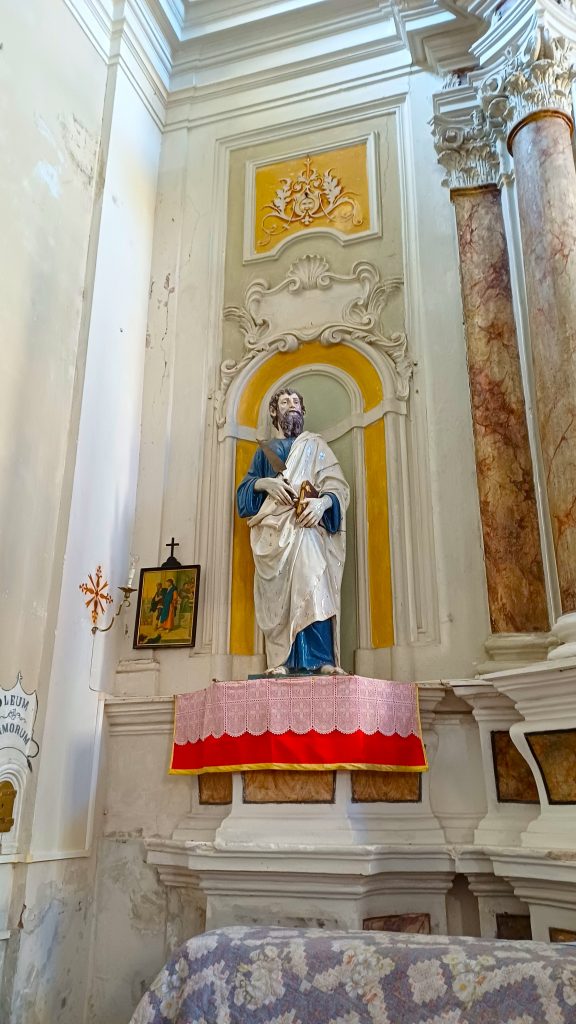
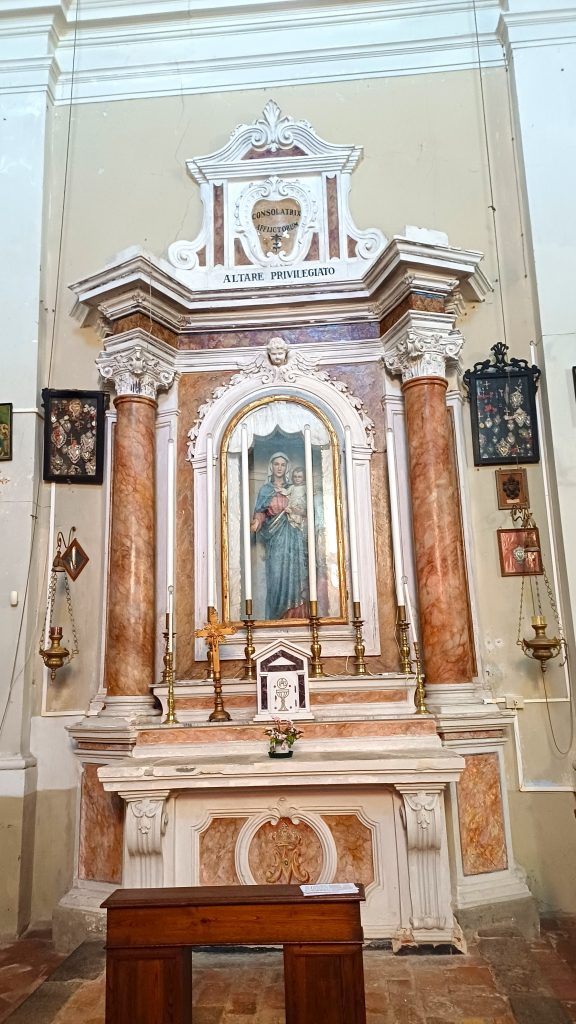
In the chapel of the Compagnia dell’ Opera di San Bartolomeo e Andrea, lie the remains of Maestro Giovanni Pacini, born in Catania in 1796. He was an opera composer, musician, and a highly prolific author. In 1857 he moved to Pescia, where he spent the last years of his life and died in 1867. The city theater of Pescia is named after him.
Information
Every fourth Sunday of the month, you can visit the village of Monte a Pescia and the Pieve di San Bartolomeo, where volunteers from the Borgo di Avvistamento Association are present.
The village can be reached by car (reach me) or by guided excursion, using the following methods.
- – Meeting in Piazza del Palagio
- – Walk towards Monte a Pescia along the ancient mule track with an ASC guide (hiking shoes recommended)
- – Visit to the Parish Church of San Bartolomeo
- – Return along the ancient mule road
Excursions take place in the afternoon, at times that vary depending on the season (early afternoon in winter; late afternoon in spring and summer). The entire excursion lasts an hour and a quarter.
Reservations are required at mobile phone +39 377 124 4058 or +39 328 008 6115