


The Chapter Library preserves 11,000 codices including 42 incunabula, 700 16th century books and 100 manuscripts
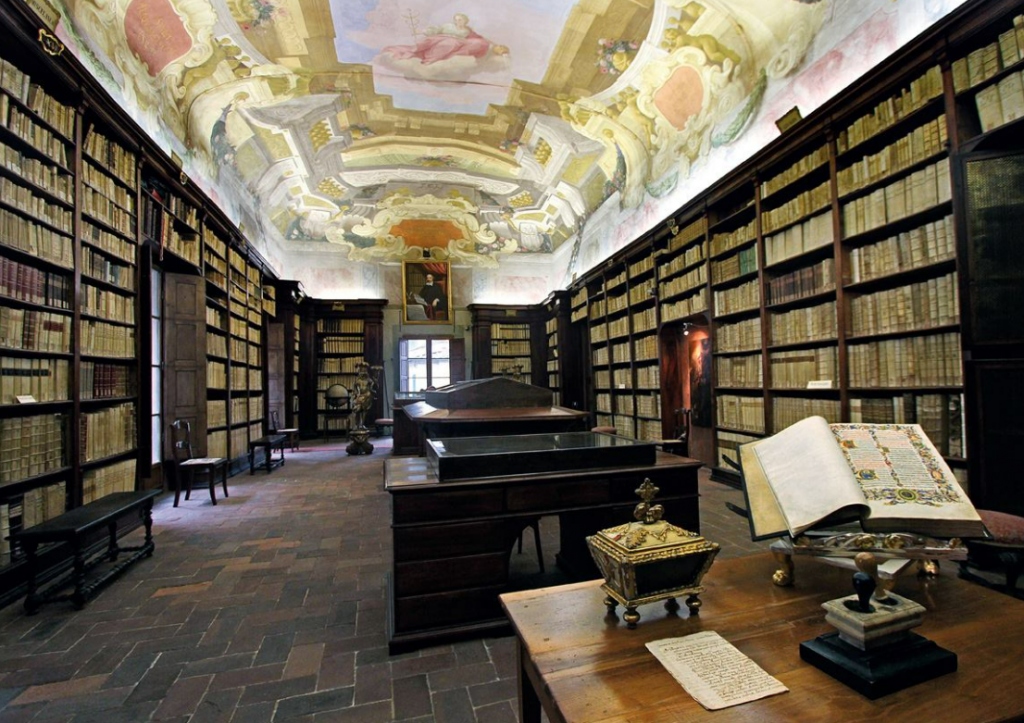
The Chapter Library traces its origins to the will of Don Romualdo Cecchi (1648). Built above the Cathedral's sacristies between the 17th and 18th centuries, it preserves 11,000 codices, including 42 incunabula, 700 16th-century books, and 100 manuscripts, ranging from a 12th-century laudarium to the letters of Vescovo Simonetti (1945).
The vault of the main hall was decorated in 1711 with frescoes by Pietro ScorziniThe painter executed on the vault, at the center of perspective illusions, the iconography of Wisdom (Sophia), represented with the figure of Hermes Trismegistus.
Ai quattro lati sono rappresentati dei cartigli con delle frasi latine riprese dall’antico testamento che avevano la funzione di richiamare gli ecclesiastici ai loro compiti e doveri, e da cui si evince che la biblioteca è specializzata in discipline giuridiche.
Sulla parete di fondo fa’ bella mostra il ritratto del Canonico Romualdo Cecchi con il cartiglio in cui si celebra l’atto fondativo, il Canonico è ritratto nell’atto di osservare e forse anche di ammonire i frequentatori della biblioteca il dipinto illustra un’allegoria della Saggezza e le sezioni tematiche. I libri in essa contenuti hanno un valore inestimabile non tanto per il numero dei volumi(supera di poco le diecimila unità)quanto piuttosto per l’importanza e la rarità dei testi conservati fin dall’inizio della fondazione.
Forty-two incunabula and more than a hundred manuscripts dating from the 13th to the 19th century are preserved.
Nelle diverse sezioni in cui sono divisi i libri, trovano posto 800 cinquecentine, e il volume più prezioso a stampa è l’incunabolo edito a Pescia nel 1488 dalla stamperia dei fratelli Orlandi. Un altro pregevole esemplare è il bellissimo messale romano Miniato del XV sec. detto della Maddalena, in quanto appartenuto alla Compagnia dei Disciplinati di Santa Maria Maddalena, Chiesa omonima posta innanzi alla Cattedrale.
Particularly noteworthy is the beautiful collection of seven thousand 16th and 17th-century engravings contained in thirty-six volumes. This impressive work arrived in the library in 1702 following the testamentary bequest of Canon Andrea Buonvicini (Rector of the Propaganda Fide College for about forty years; after his death, his role was filled only by Cardinals, the first of whom was Cardinal Fabroni of Pistoia), along with manuscripts of considerable value.
of the Collegio di Propaganda Fide for about forty years; after his death, his role was held exclusively by Cardinals, the first of whom was Cardinal Fabroni of Pistoia.
At the end of the room stand two 17th-century globes. This extraordinary Chapter Library of the cathedral is considered one of the most beautiful in Tuscany.
Access to this heritage is not immediate: the Capitolare Library, in fact, is not always open to the public with regular or continuous opening hours. This "exclusive" nature and the management linked to the availability of the Diocese make the visit an even rarer and more desired experience. For scholars and tourists, the limited opening often represents a logistical challenge, but it is also a reflection of the fragility and extreme care that such volumes require.
Not being a high-traffic museum, its consultation frequently takes place by appointment or on the occasion of specific cultural events. This discontinuity in the opening invites the visitor to a slower and more conscious search, transforming each entrance into a privilege granted to those who know how to wait, making the Capitolare a "temple of knowledge" that is revealed only to those who understand its profound value.
( (learn more )