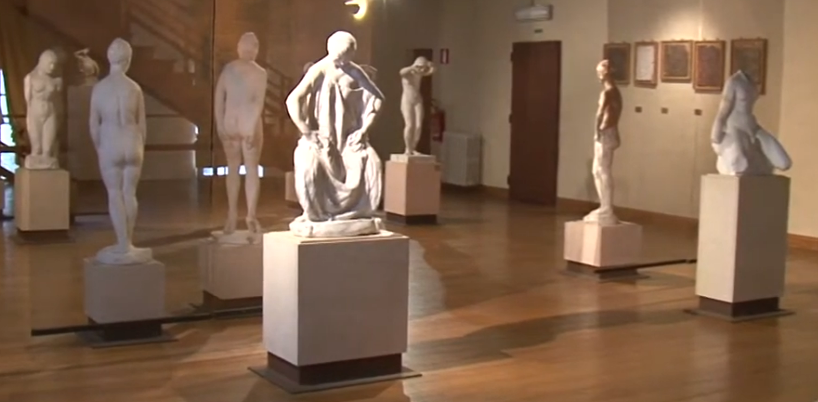


Tuscany – In the medieval heart of Pesciainside the evocative Palazzo del Podestà (also known as the Palagio), lies one of the most significant sculptural treasures of the Italian 20th century: the Gipsoteca Libero AndreottiOpened in 1992, the collection celebrates the genius of Libero Andreotti (1875–1933), a local artist from Pescia who masterfully blended Tuscan classicism with European avant-garde movements.
A Journey into the Creative Process
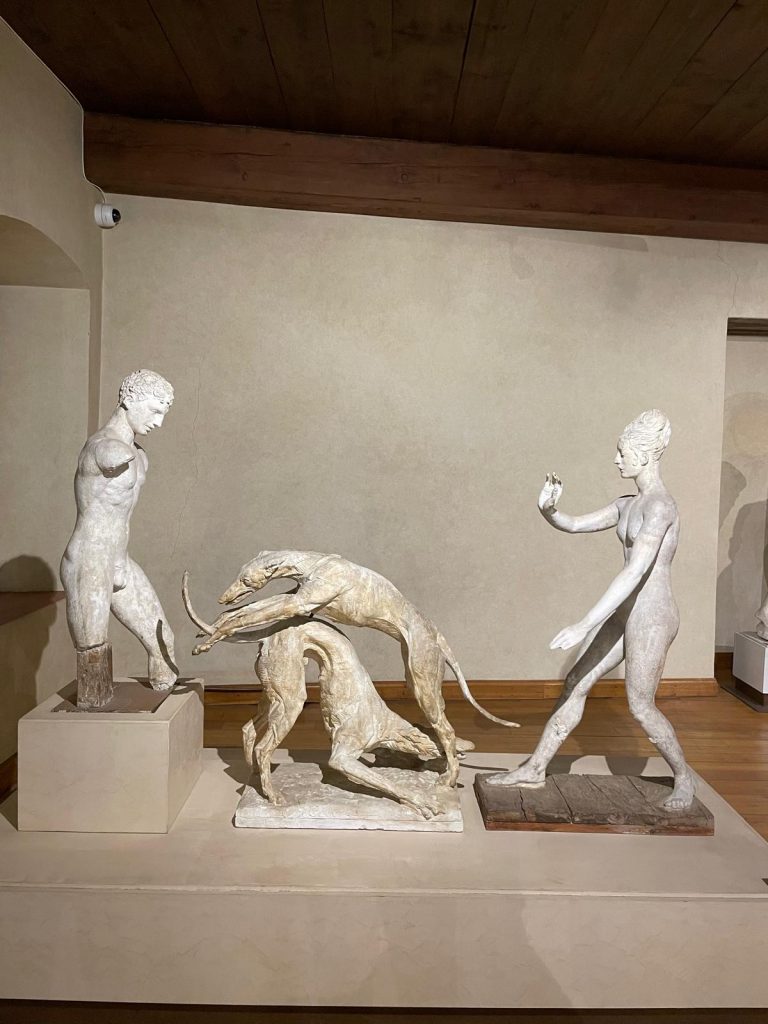
Unlike a traditional museum of bronze statues, the gallery displays approximately 230 original plaster models, donated by the sculptor's heirs. These pieces represent the most intimate and vital stage of Andreotti's work: here, one can see the marks of the spatulas and the artist's fingerprints, captured in the plaster before the final casting.
The exhibition layout spans several floors, offering a complete overview of his stylistic evolution:
- The Parisian Period: Works imbued with elegance and lightness, such as the famous Danzatrici, reflecting the influence of French taste and Art Deco.
- Monumental Maturity: On the ground floor and in the upper rooms, the plaster casts for major public monuments stand out, including the imposing figures for the Victory Monument of Bolzano and the War Memorial of Milan..
- The Grace of Female and Child Subjects: Works like Pomona (the goddess of fertility) showcase a soft plasticity and extraordinary poetic sensitivity.
Architecture and Memory
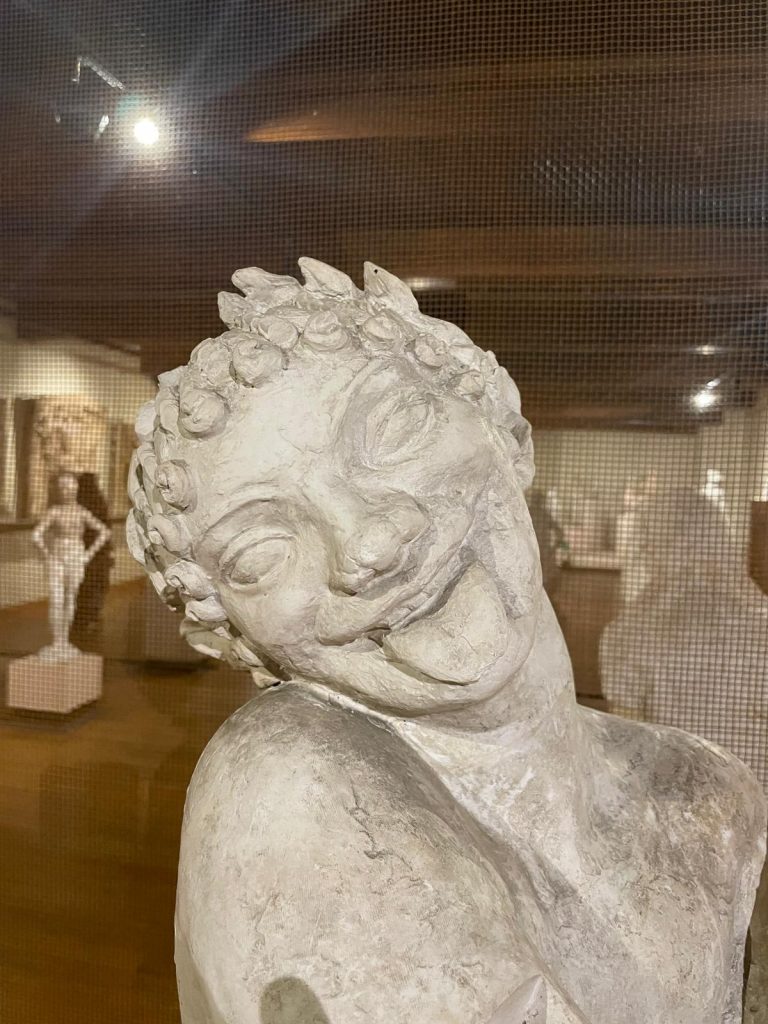
The display, curated with essential rigor, perfectly complements the palace’s 13th-century architecture. High wooden trusses and stone walls serve as the backdrop for Andreotti's "white ghosts," creating an atmosphere suspended in time. The museum also houses an important documentary archive, featuring letters and photographs that reconstruct the sculptor's relationships with intellectuals such as Ugo Ojetti and Luigi Pirandello.
Visiting the Gipsoteca is not just about admiring sculptures; it is about stepping directly into the workshop of a master who marked the transition from 19th-century tradition to modernity.
further information : https://www.museoliberoandreotti.it/