

Castelvecchio village of the Ten Castles in the Svizzera Pesciatina
Castelvecchio nel corso della sua lunga storia , ha seguito le alterne sorti di Vellano : nel 1333 venne dato in feudo alla famiglia Garzoni, espugnato poi da un membro della medesima famiglia, fu ceduto ai pisani nel 1362, per poi tornare due anni dopo sotto i fiorentini. Nel centro del paese, nella parte più alta, sono ancora visibili i resti della torre che fu distrutta tra le dispute fra Firenze e Pisa.
Located in the center of the village, near the ancient gate, it extends above l’Oratorio del SS. Rosario and it serves as the parish church. Dating back to the 18th century, it features three aisles. Its interior houses numerous 17th-century paintings, recently restored, and a 16th-century arched panel (The Madonna and Child Enthroned with Saints John the Baptist and Thomas). There are also processional insignias and banners, two carved and gilded wooden tabernacles—one of which dates to the 17th century—and an 18th-century wooden statue of Saint Anthony Abbot. The external lunette, depicting the titular Saint, is by Franco del Sarto from Pescia. (cit. Alessandro Birindelli)
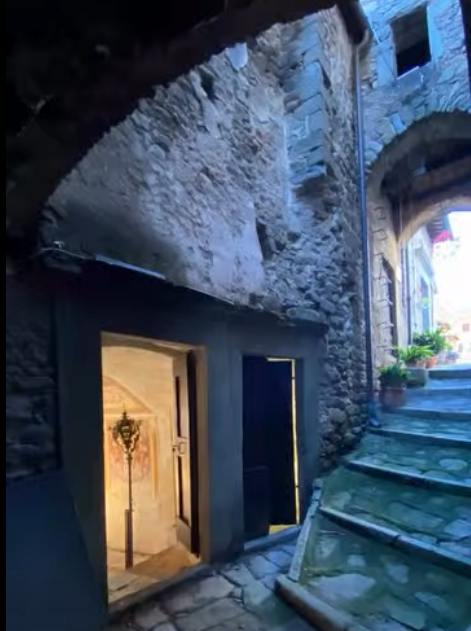
Entrata dell’Oratorio del SS.Rosario 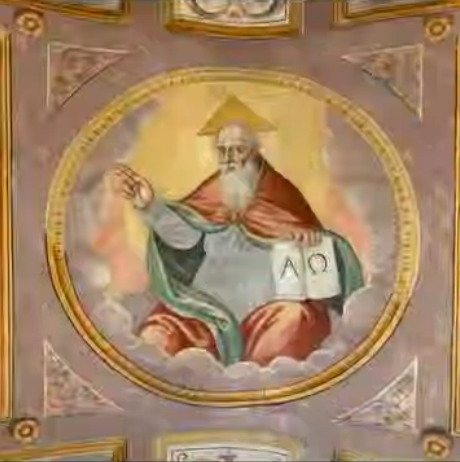
Padre Eterno Benedicente 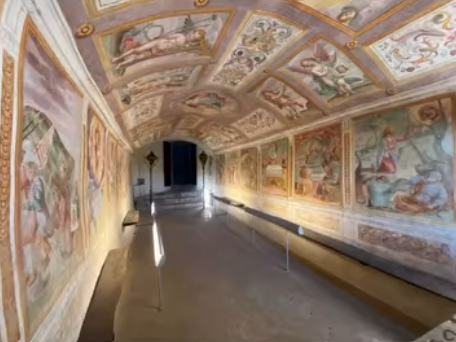
Interior 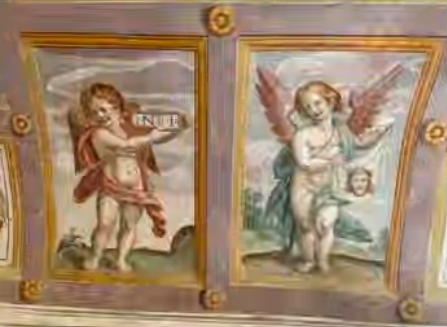
Angeli con strumenti della Passione 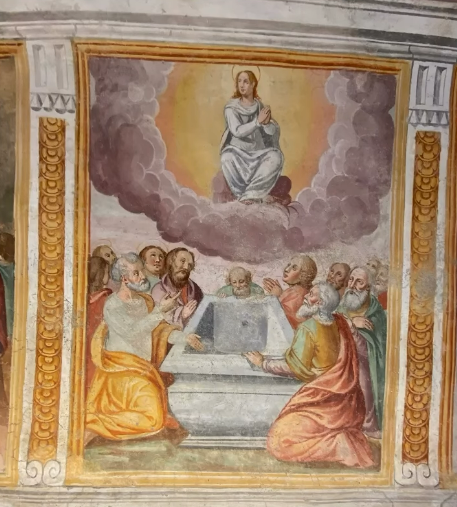
Assunzione in Cielo 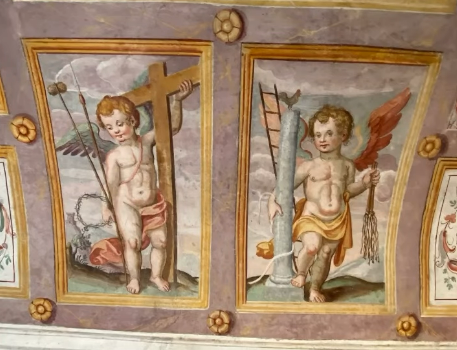
Angeli con strumenti della Passione 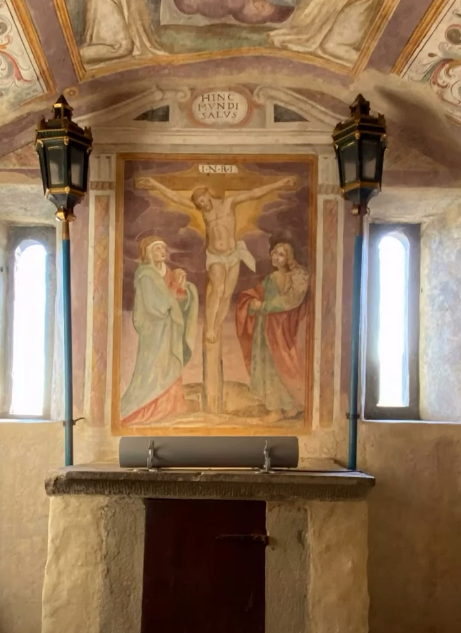
Altare – Crocefissione 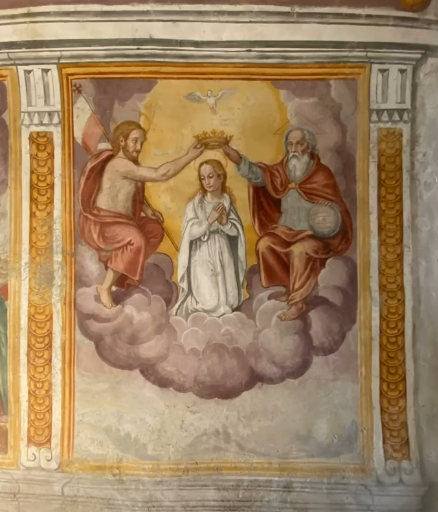
Incoronazione della Madonna 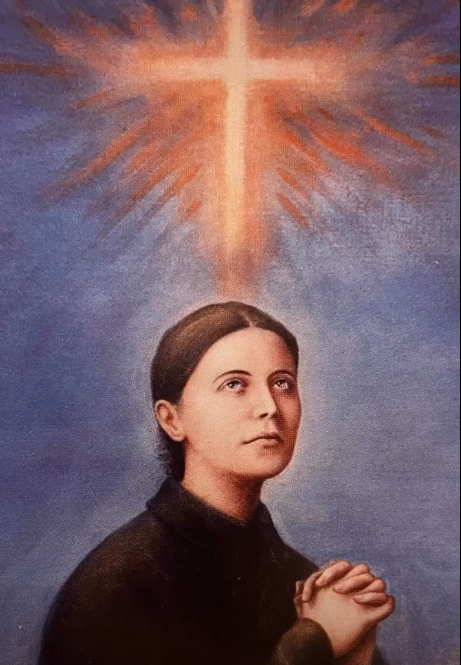
Santa Gemma, Franco del Sarto, 2005 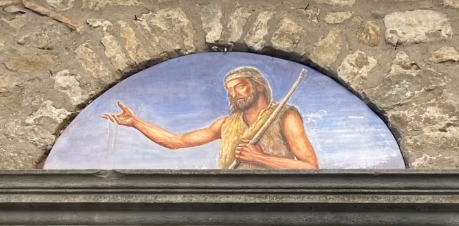
San Giovanni Battista, Franco del Sarto, 2005 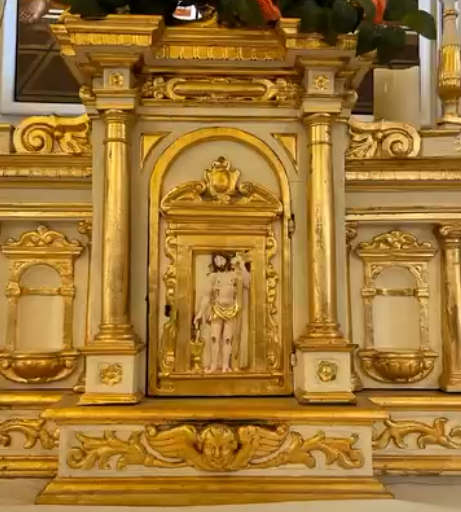
Tabernacolo sec XVII
Descending toward the center of the village, you will find the square with its pietra serena fountain; to the right stands the ancient entrance gate, through which you can reach the Church of San Giovanni Battista, dating back to the early 17th century. It houses several artistic works, including a valuable 15th-century panel painting depicting the Madonna and Child Enthroned between Saints John and Thomas.
Through a narrow alleyway passing beneath the church bell tower, you can access the rooms of the’Oratorio del SS. Rosario.It consists of three small barrel-vaulted crypts; the central one is entirely decorated with frescoes dating back to the late 16th century, depicting the Mysteries of the Holy Rosary, while the vault features grotesques and cherubs with the symbols of the Passion of Christ. Located beneath the Church of San Giovanni Battista, it served as a warehouse until a few years ago.
It is accessed via a paved path located beneath the bell tower. Dating from the late 16th to the early 17th century, its walls and ceiling are entirely frescoed with scenes of the Mysteries of the Rosary and the Passion of Christ. It served as the headquarters of the namesake Confraternity (Compagnia) until the early 1900s. Restored in 2006, the space is illuminated by two single-light windows located on either side of the altar. Each scene is illustrated within a frame and adorned with faux columns and marble panels. The frescoes are the work of a local painter, possibly the same unknown artist who created the Last Supper preserved at the Convent of San Francesco in Pescia.
Upon entering the room, the paintings follow one another from the left wall to the right according to the order of the Mysteries: Joyful, Sorrowful, and Glorious. The Crucifixion, located above the altar, represents the centerpiece of the entire pictorial cycle. In a room adjacent to the Oratory, the fresco of the Madonna and Child with Saints Sebastian and Roch is preserved. (cit. Alessandro Birindelli)
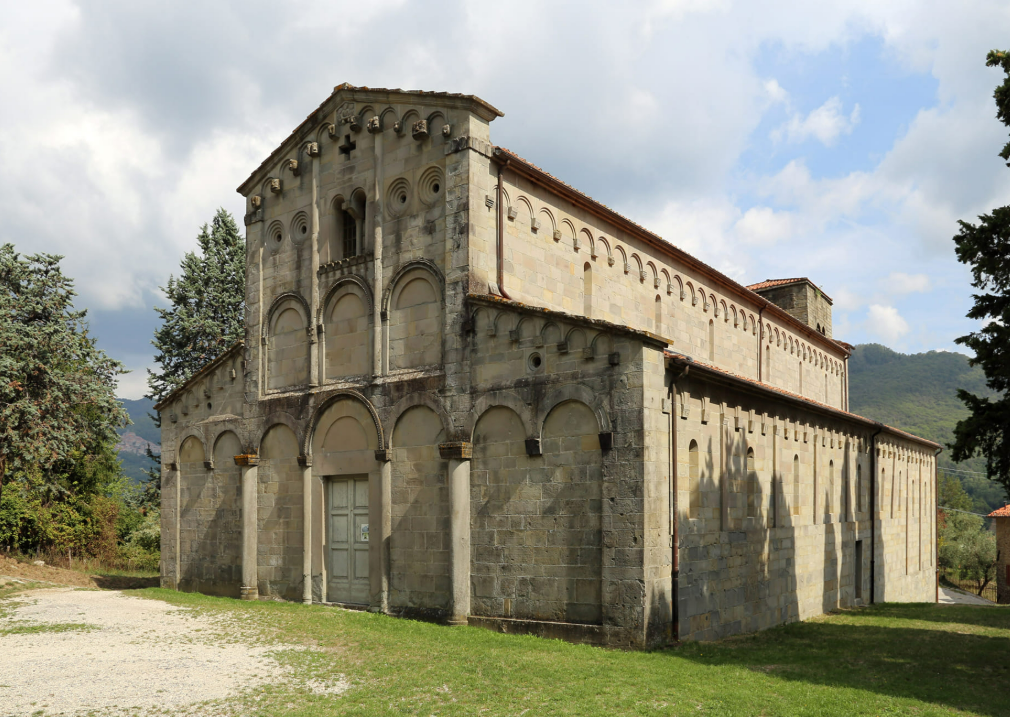
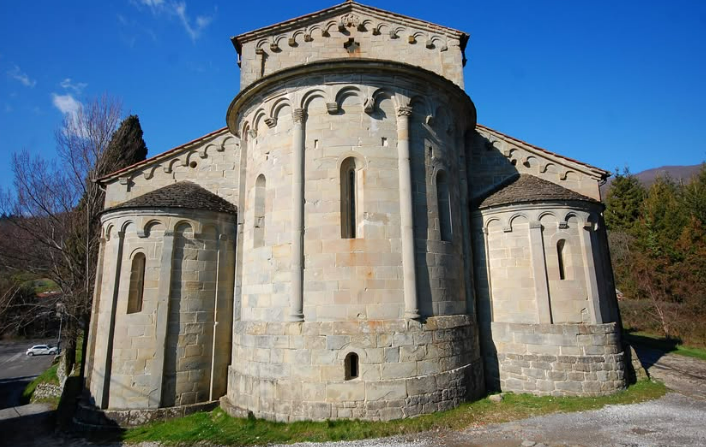
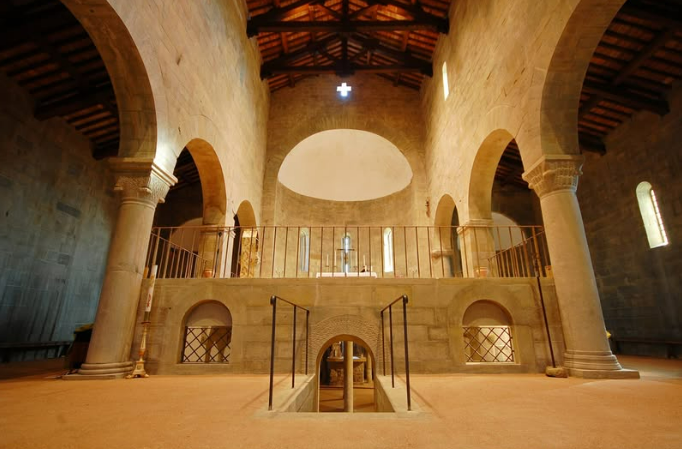
The Parish Church of SS. Tommaso and Ansanoit stands outside the village in a dominant position, along the ancient road connecting to Lucchio and the Val di Lima. Documented as far back as 879 in a parchment by the Lucchese Bishop Gherardo, it is one of the oldest churches in the province. It was built using locally sourced pietra serena; though Romanesque in style, it has been reconstructed several times. The interior features three apsed aisles separated by a long series of arches and columns with carved capitals.
The Crypt is located beneath the raised Presbytery. On the facades, there are many capitals, enigmatic figures, and archaic masks carved in pietra serena dating back to the 12th century; some of these served as warnings or signals for ancient wayfarers. The Bell Tower, an ancient watchtower, is situated at the rear of the church. Beside the Parish Church (Pieve), we can admire several works created during the International Sculpture Symposia held in Valleriana. (cit. Alessandro Birindelli – photos by Roberto Flori)
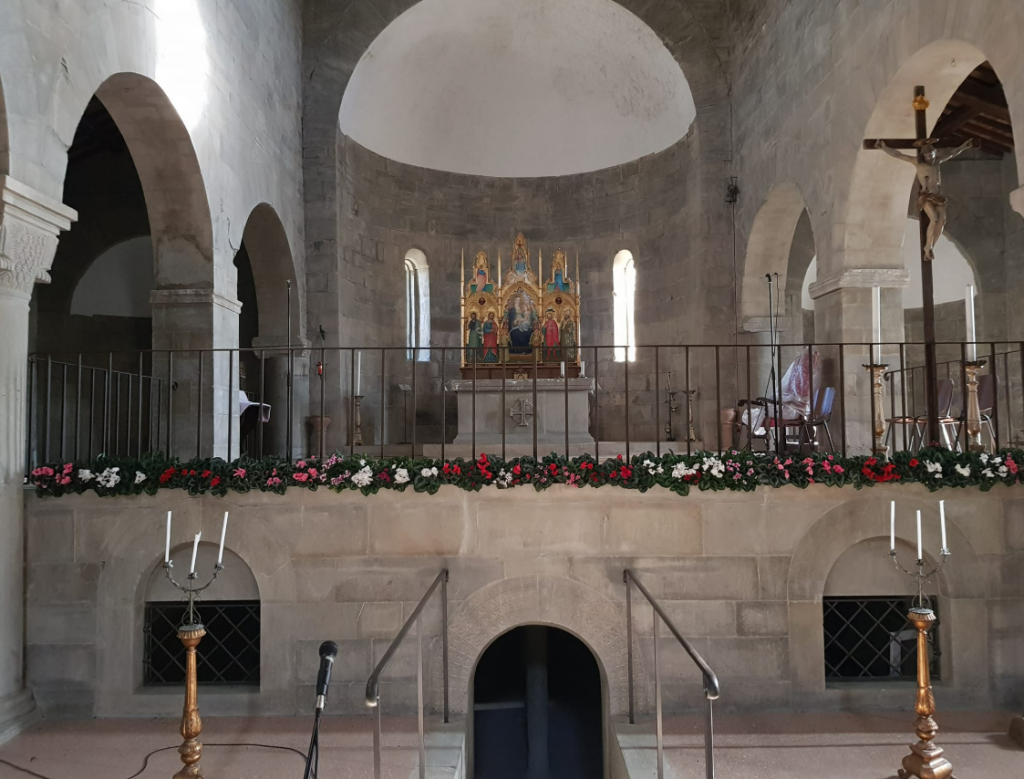
Presbytery 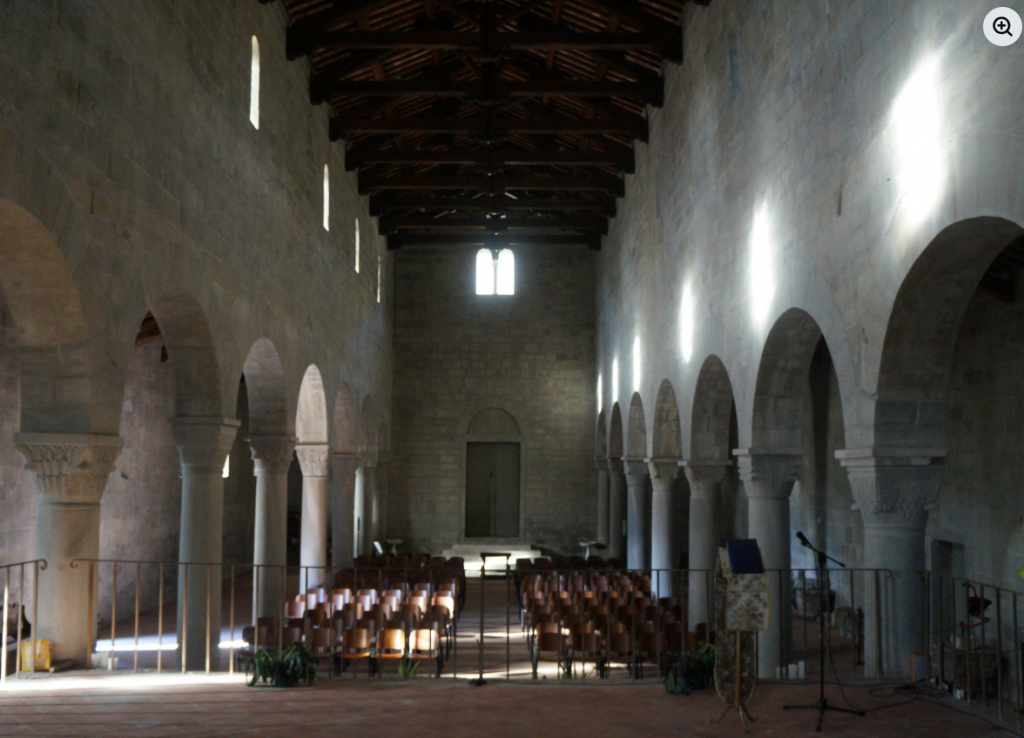
Interior 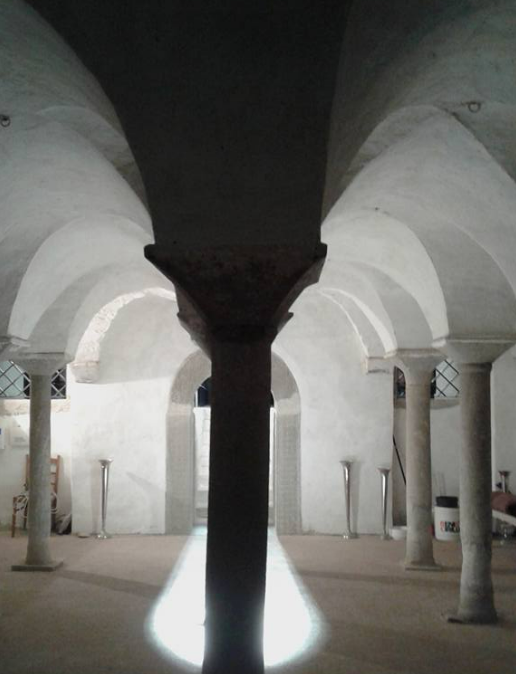
Cripta 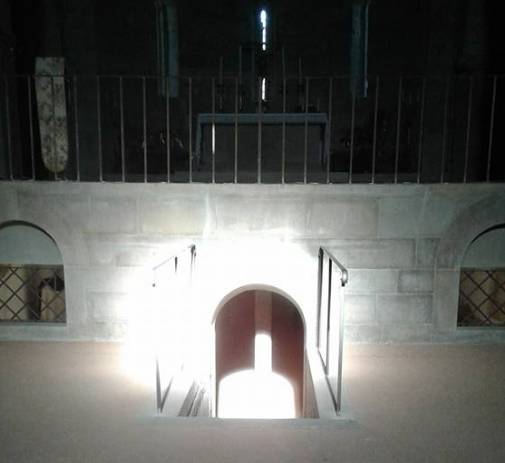
Entrata Cripta 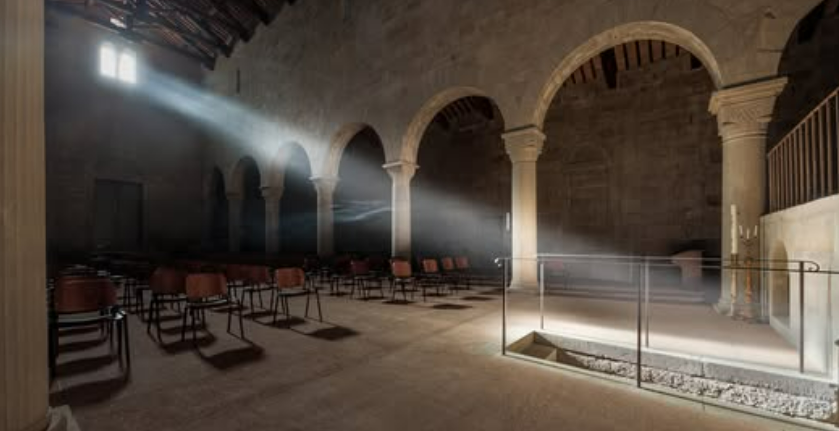
Interior 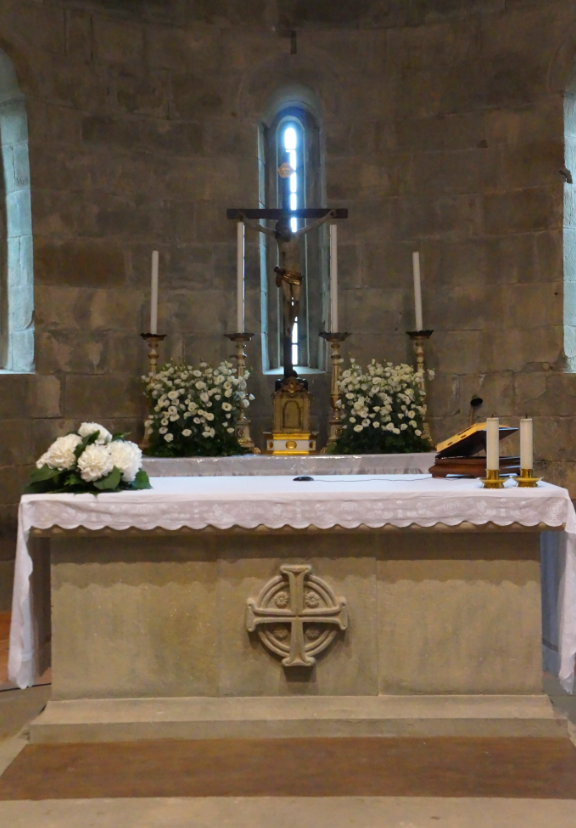
Altare 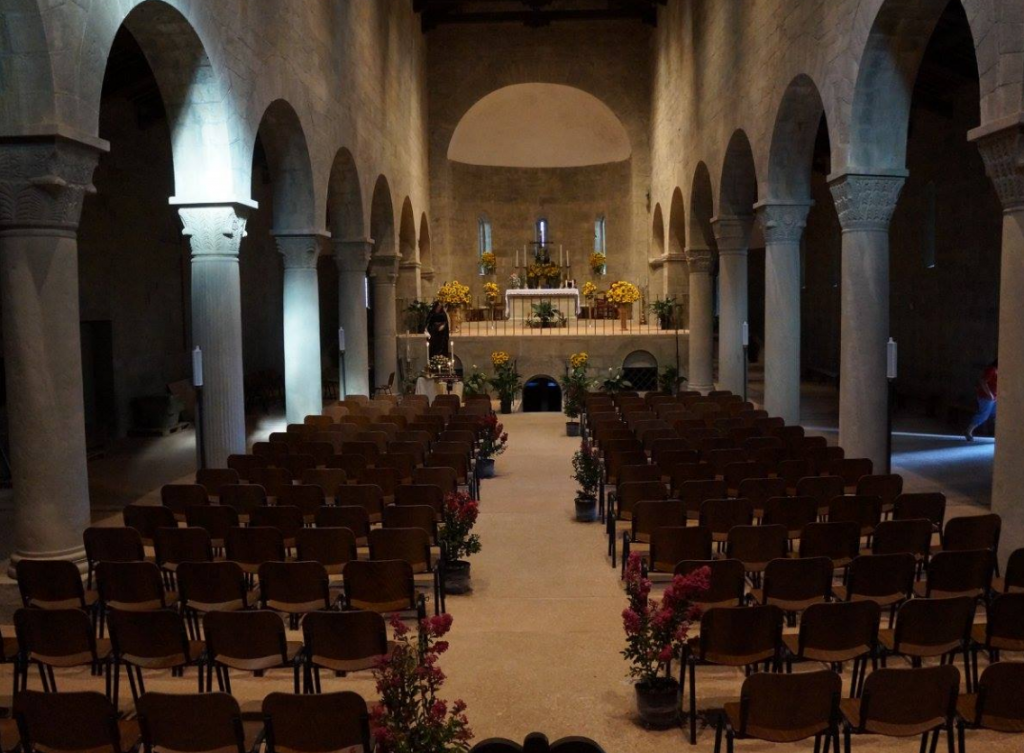
Interior 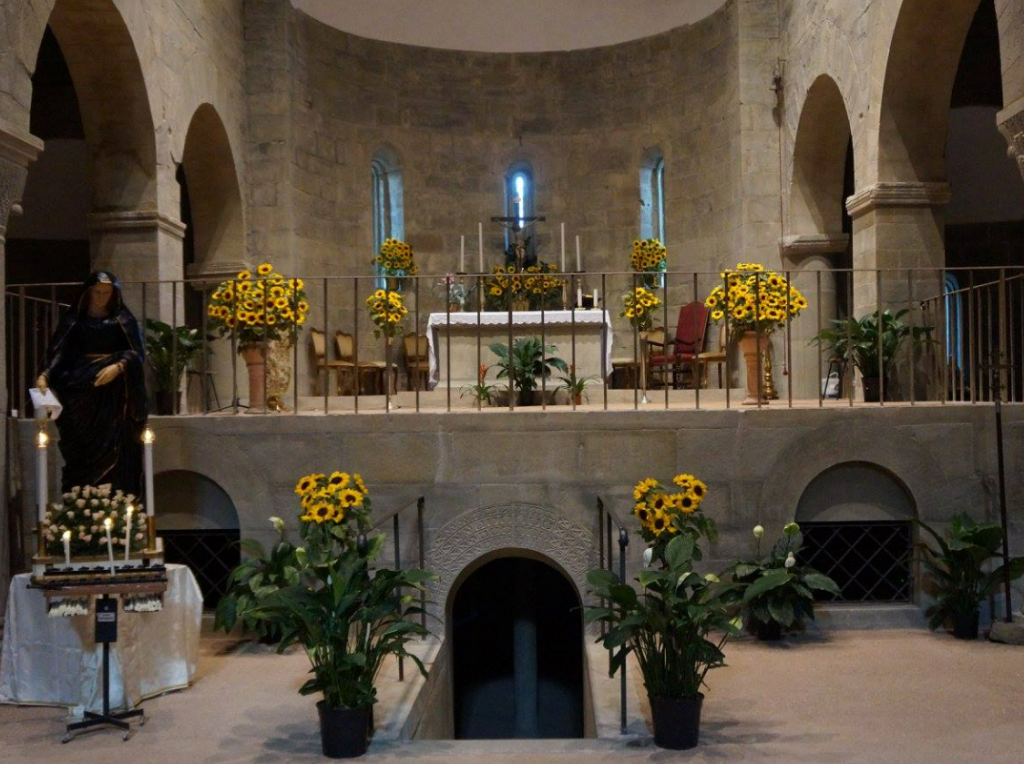
Presbiterio rialzato – entrata della cripta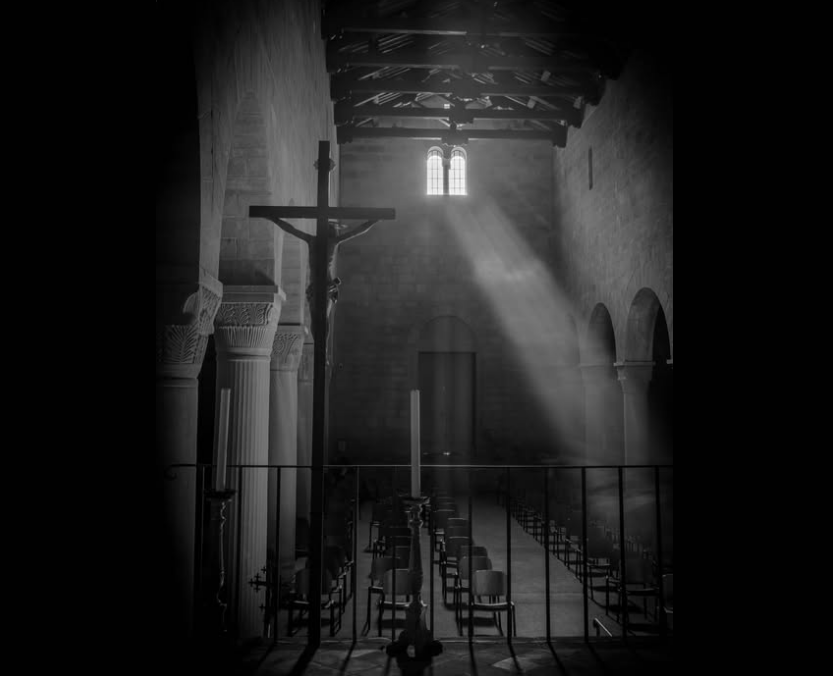
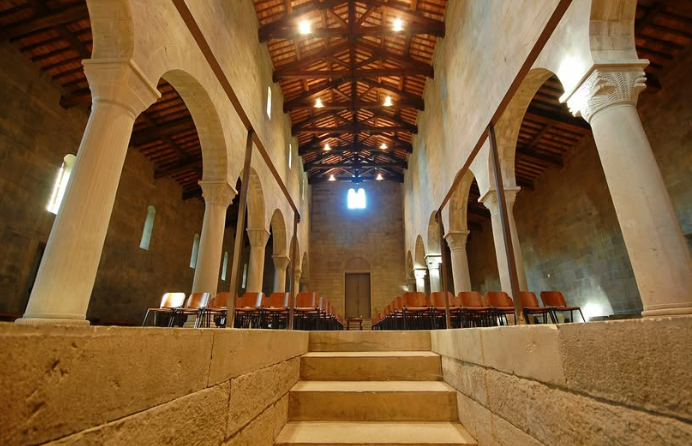
Scale della cripta 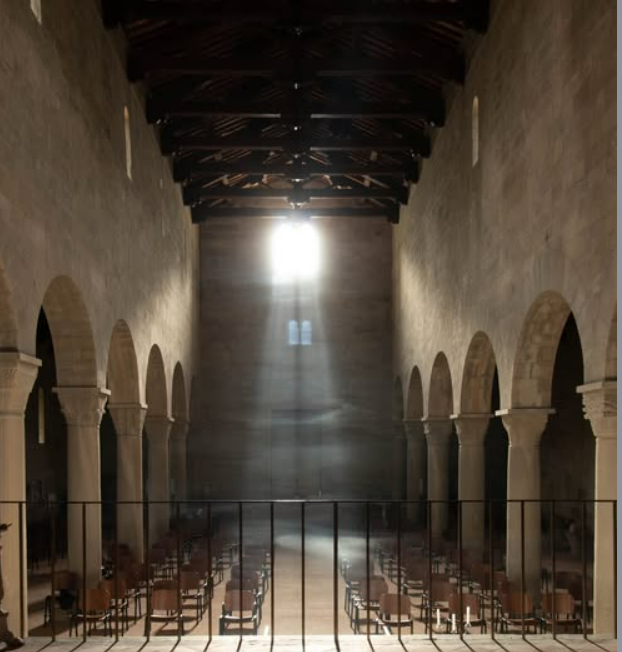
Interior
per visite guidate alla Pieve dei S.S. Tommaso e Ansano e Oratorio SS. Rosario 335-5615543 Roberto o 348-3539850 Valeria – gpcastelvecchio@gmail.com