

From Bareglia to Santa Margherita
In past centuries, the mule track leading from Bareglia to Santa Margherita represented the quickest alternative for reaching the villages of our mountains; in fact, from Santa Margherita, the route continued towards Medicina, Fibbialla, and San Quirico. The main road, the so-called "barrocciabile" (carriage road), instead proceeded from Pescia to the locality of La Croce di Pietrabuona, roughly following the course of the river, before climbing towards Pietrabuona Castello.
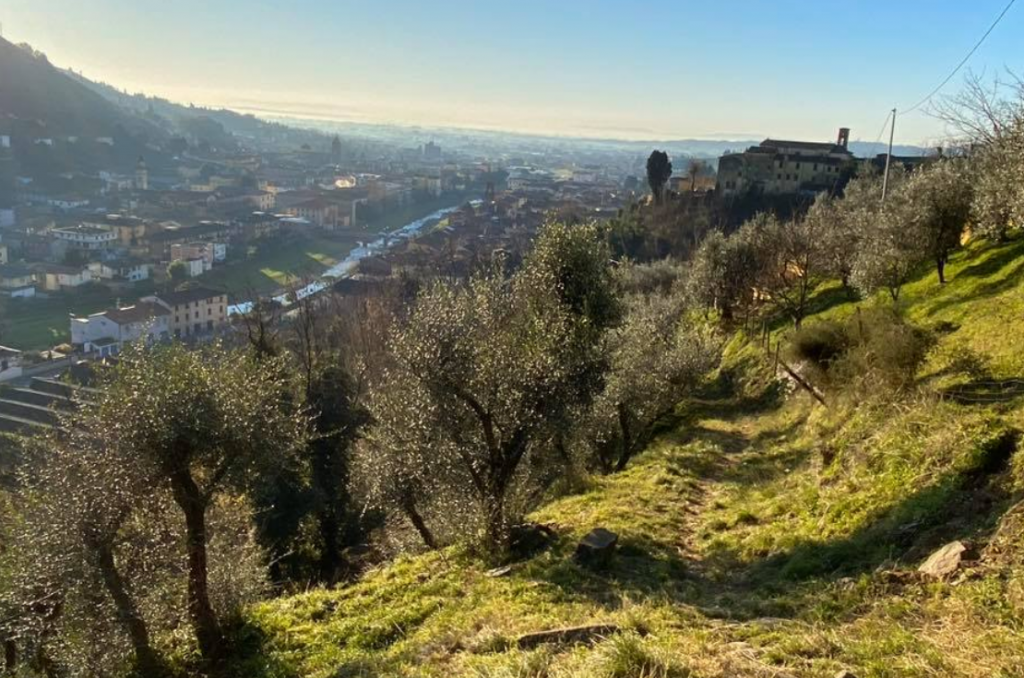
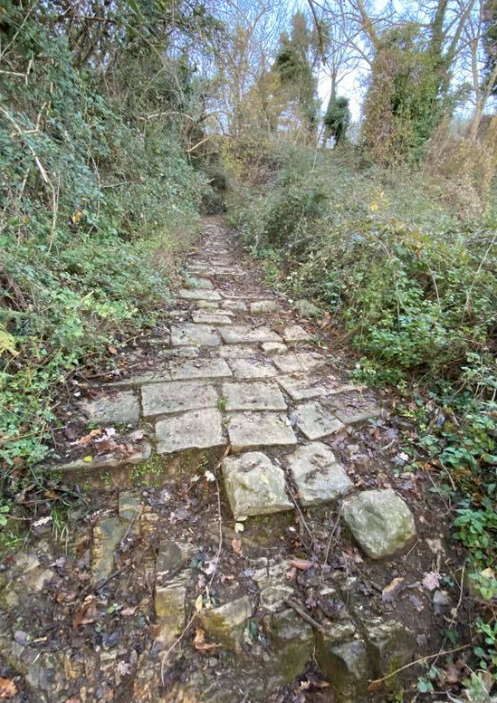
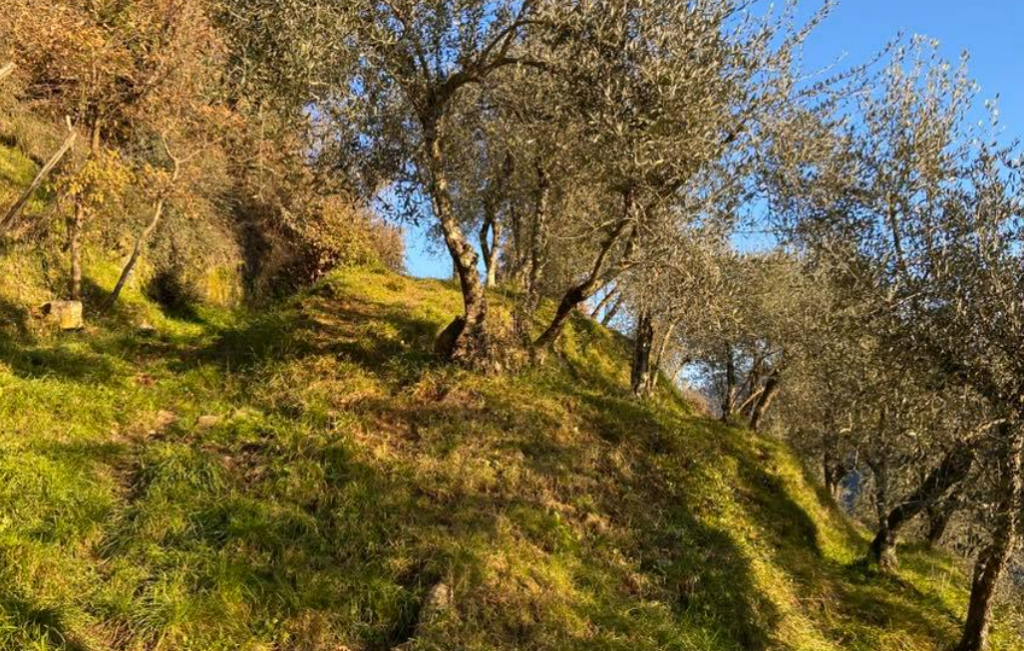
Our mule track, CAI path no. 50, begins in Piazzetta del Moro and continues to the left into Via dell’Acido. It reaches Santa Margherita (327 meters) in 1.8 km and about 40 minutes of walking. It is a constant climb, with a pavement that is irregular in places and sometimes covered by grass or leaves; it is bordered by olive terraces and dry-stone walls.
Piazzetta del Moro (named after the nickname of the miller who owned a mill there two centuries ago) was a crucial road junction for the economy of Pescia and its factories, so much so that in 1845, work began here for the construction of Via Mammianese. On that occasion, the Porta del Moro (or Porta della Montagna), one of the city's nine gates, was demolished. The gate was connected to the city walls which, for at least seven centuries, climbed parallel to the Rio Bareglia and reached beyond Cafaggio to protect the Castle of Bareglia, built in 1030 to guard the first city settlement.
The area of Bareglia, Piazzetta del Moro, and Via dell’Acido was a zone of industrial plants (opifici), and today the ruins of three factories can be found there: Del Magro (became a mill and spinning mill in 1825; from 1915 to 1919 it was transformed into the "Borgognoni" Infantry Barracks; from 1951 it was a factory for aluminum objects and water heaters; it definitively ceased activity in 1989, and the ruins were recently partially demolished); the Gran Filanda owned by Scoti (a five-story building established in the mid-19th century); and the Riccioni Tannery (from 1906; it has a unique shape, widening at the base and rising in height in an east-west direction).
In Via dell’Acido (named after the muriatic acid used in tanneries for processing hides), we cross the small bridge over the Rio Bareglia, located between the three aforementioned factories. We climb Colle Monzone di Bareglia, and on the right, we can observe the hills of Speri and Sorico and three ancient industrial plants, renovated but uninhabited, arranged along Via Mammianese: the Romoli Paper Mill (known as Il Camminone due to its large chimney; dating from the late 1800s, ochre yellow in color); the Paradiso Paper Mill (unplastered, dating from 1825, positioned perpendicularly to Via Mammianese); and the Paradisino Paper Mill (red in color, dating from 1825).
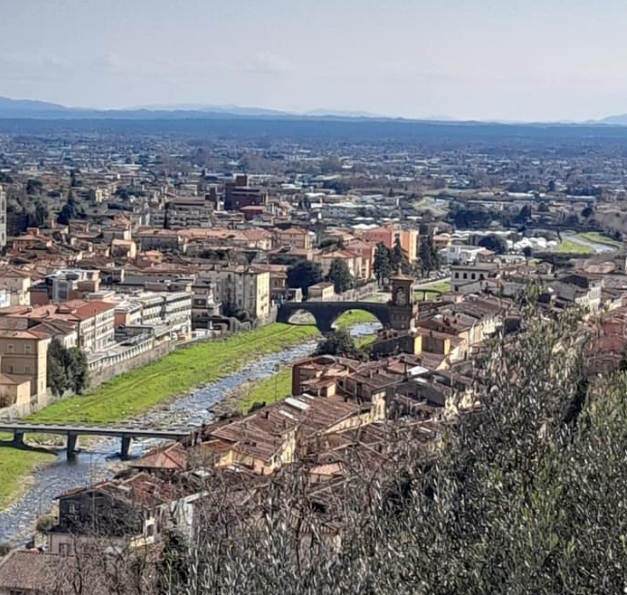
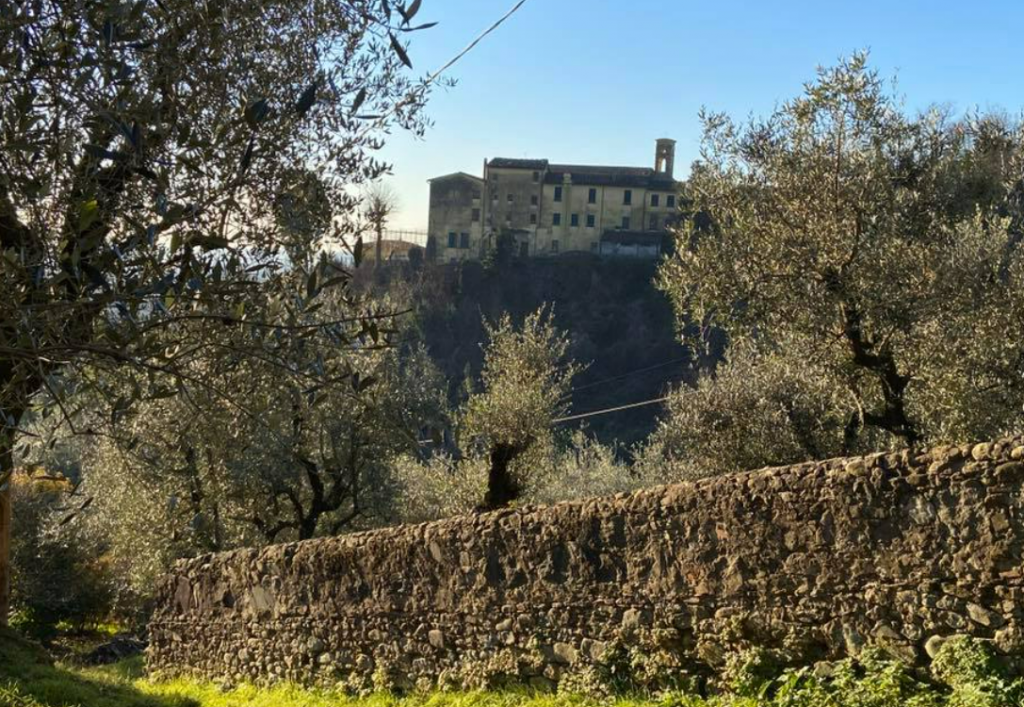
After 30 minutes, the mule track reaches a paved road that is followed for about 500 meters before arriving at the Church of San Concordio on the slopes of Monte Cupola. From here, one can observe an unusual panorama of Pescia and Monte a Pescia, while to the north, Vellano and the opposite Monte Lignana, with its triangular peak, are visible.
On Colle Monzone di Bareglia, there was once an ancient road, Via San Marco, which began at Piazzetta del Moro and proceeded lower than our mule track, parallel to the current paved road to Santa Margherita; in the early 1900s, the industrial development of the area erased it forever. (quoted from Alessandro Birindelli)
(cit. Alessandro Birindelli)