

The Oratory of the Madonna di Piè di Piazza, located at the southern end of the Piazza Grande in Pescia, is one of the most precious jewels of the Tuscan Renaissance outside of Florence. Its history and architecture reveal a profound connection between popular faith and the artistic excellence of the 15th century.
A masterpiece of the Renaissance
Built in 1447, the building is attributed to Andrea Cavalcanti, known as Buggiano, the adopted son and favorite pupil of Filippo Brunelleschi. The master's influence is evident in the geometric rigor and purity of its lines. The sober and elegant façade features a three-arched loggia (now filled in) resting on slender columns, fully reflecting the canons of Renaissance perspective and harmony.
The oratory is also known as the Church of Saints Peter and Paul, but the popular name “Piè di Piazza” derives from its geographical location, at the foot of the large market space that constitutes the civic center of the city.
Internal Treasures: Faith and Art
The interior, despite its small size, houses works of extraordinary value:
- The Wooden Ceiling: One of the most spectacular elements is the sumptuous coffered ceiling in carved and gilded wood, made in 1609 by Giovanni Zeti from Pistoia
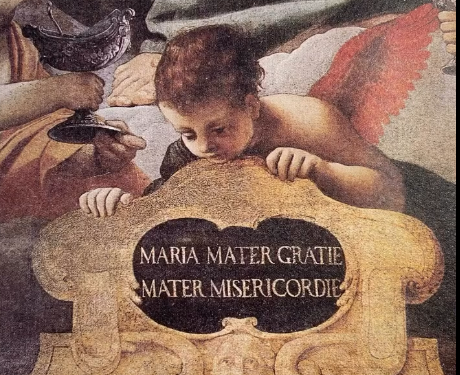
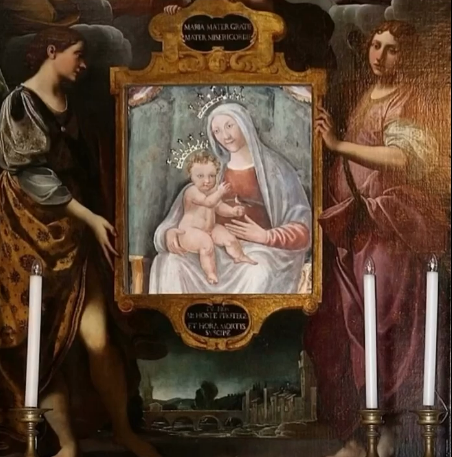
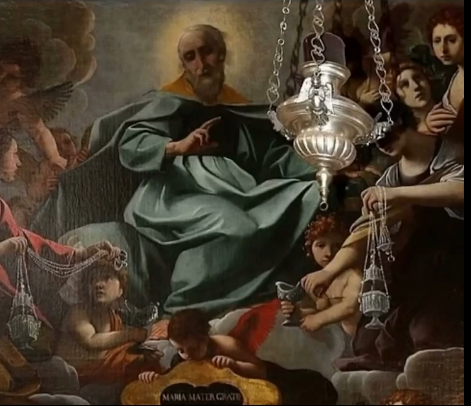
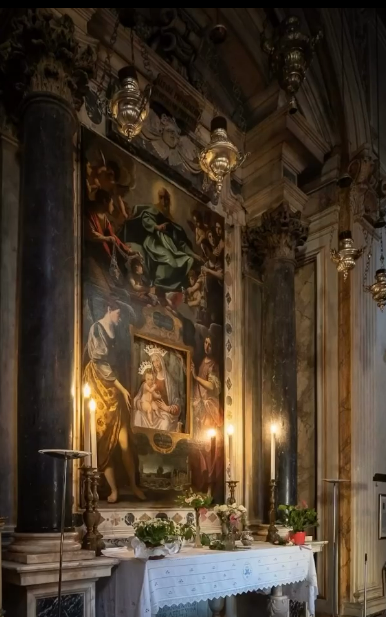
- Two paintings by Alessandro Tiarini: one in Pescia and one in the Louvre. In Pescia, in the Oratory of Saints Peter and Paul or Church of Pie' di Piazza, above the high altar, is preserved the fresco Madonna and Child, from the 15th century. Until 1605, the work was located in a shrine on the Ponte del Duomo. Once transferred to the church, it was framed by the painting Eternal Father among Angels by the Bolognese Alessandro Tiarini (1577-1668), who worked in "Pescia di Lucchesia" between 1602 and 1605. Tiarini's canvas features a view of the city with the bell towers, the Ponte del Duomo and the aforementioned tabernacle. Many paintings by Tiarini are found in Emilia Romagna and Tuscany, but the most important work is preserved in the Louvre Museum: the Repentance of Saint Joseph, created in 1617-1619. It was confiscated in 1796 by the French from the Church of the Mendicanti in Bologna.
Today the oratory remains a place of silence and prayer, an essential stopping point for anyone wishing to grasp the historical soul of Pescia, where Brunelleschi's influence blends harmoniously with local devotion.(learn more)