

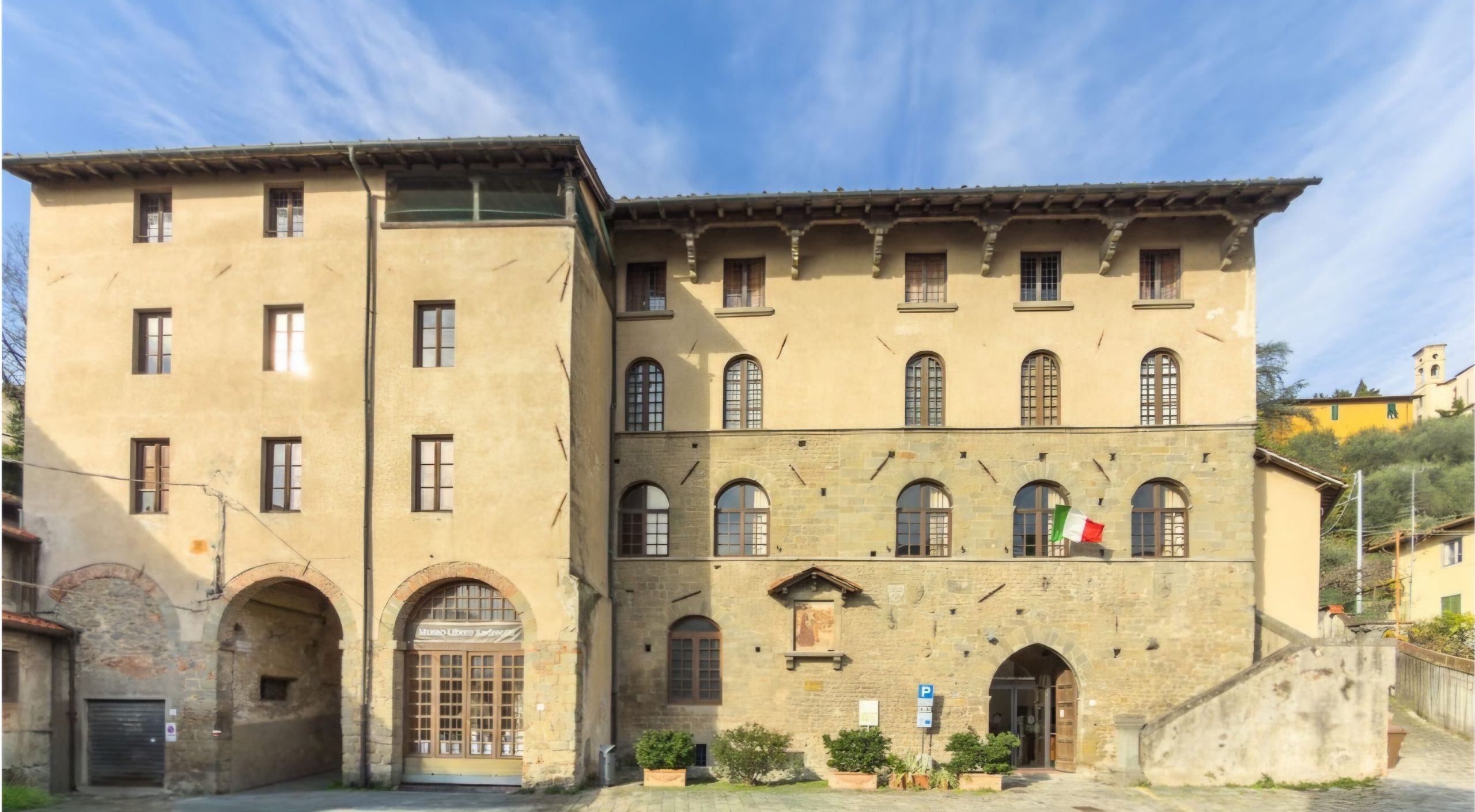
The Palazzo del Podestà, affectionately known by the people of Pescia as "Il Palagio," is one of the most iconic and ancient buildings in Pescia. Located in the heart of the oldest urban center, the "Capanne" neighborhood, this imposing 13th-century building serves as a bridge between the city's civic and religious history, just steps from the Collegiate Church of Saints Stephen and Nicholas.
A witness to centuries of history
A witness to centuries of history. Originally built in the 12th century as a public assembly hall and a place to store municipal documents, the palace reflects the fortified architecture typical of medieval Tuscany. Its function has changed dramatically over the centuries, adapting to the political transformations of the Valdinievole.
- Seat of Power : It was the official residence of the Podestà until 1424, when the office was abolished in favor of the Florentine Vicar.
- Eclectic destinations: Over time, its spacious rooms have housed a prison, an arsenal, a theater, public schools, and even a pawnshop in the 16th century.
- Cultural renaissance: After careful restoration in the 1970s, the Palace regained its monumental dignity, becoming the permanent seat of the Gipsoteca Libero Andreotti.
Architecture and interior spaces
From the outside, the palace is striking for its austere stone mass and characteristic elongated shape. The southern side once featured a portico for public gatherings, a feature that underscored the building's democratic purpose.
Inside, the spaces have been recovered respecting the original structure:
- Ground floor: Characterized by large spaces, it today houses Andreotti's monumental plaster casts destined for the War Memorials of Milan and Bolzano. Caratterizzato da ampi volumi, ospita oggi i monumentali gessi di Andreotti destinati ai Monumenti ai Caduti di Milano e Bolzano.
- First floor: A vast living room with wooden truss ceiling, used for conferences and temporary exhibitions, which recreates the atmosphere of the ancient council chambers.
- Upper floors: Home to the permanent collection and historical archive, where the light filtering through the medieval windows illuminates the sculptor's white works, creating a striking contrast between the ancient stone and the modernity of the plaster casts.
Today, the Palagio is not just a monument to be admired externally, but a living cultural center that preserves the artistic identity of Pescia.