

Church of San Francesco in Pescia an unmissable visit
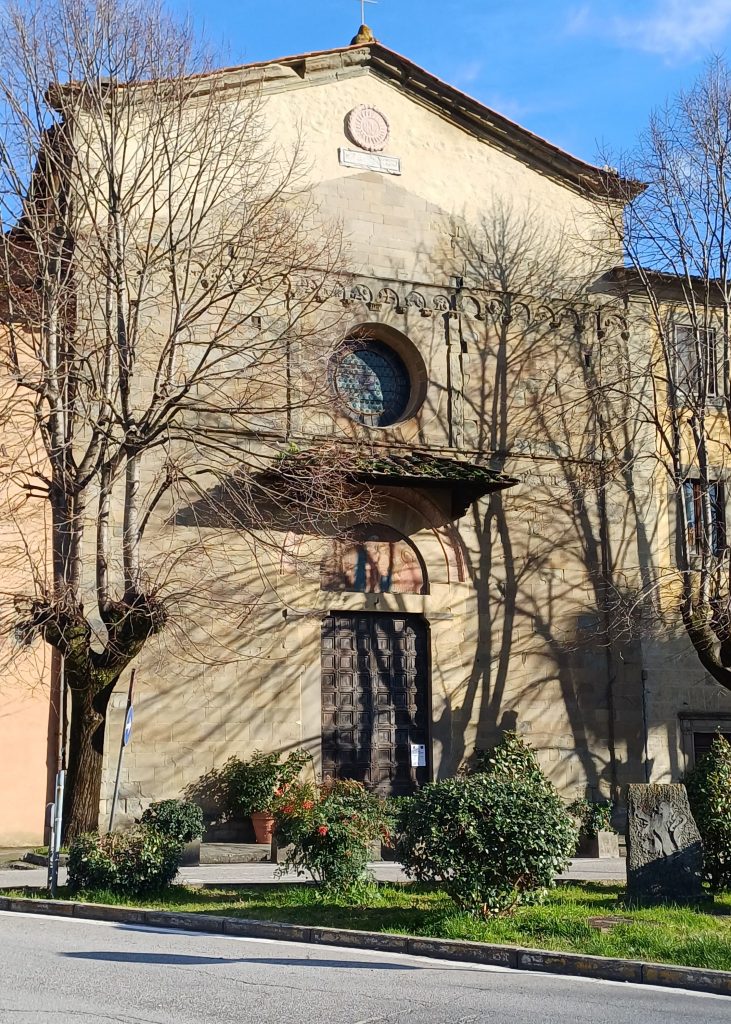
The Church of San Francesco in Pescia is full of history, legends and village glories, the beautiful church of S. Francesco is undoubtedly the most loved by the Pescia population. Restored around the 1920s, the current church has late 14th century origins. From documents we know that already in the first half of the 14th century there was a church dedicated to the Saint of Assisi in Pescia. A beautiful local legend transmits the news that Francis visited the community of Pescia around 1211. On that occasion he was a guest of the Orlandi family who later built a small oratory from which the current church originated.
-
Inside, the church of San Francesco, of clear Gothic origin, displays many works of art; the plan is a Latin cross and the transept is characterized by the presence of two stone altars and splendid paintings. The first chapel on the left was built between ca. 1453. and 1458 by the will of the brothers Antonio and Giovanni Cardini; the design of the original furniture is attributed to Filippo Brunelleschi, while the executor is Andrea di Lazzaro Cavalcanti known as Buggiano, pupil and adoptive son of the master.
In the centre, beyond the beautiful five-legged marble table, there is the fifteenth-century crucifix in Florentine style which refers to the activity of Giuliano da Maiano (Maiano 1432-Naples 1490), while the coloring of the simulacrum was carried out by Neri di Bicci. On the back wall there is a fresco painting from 1458 also by Neri di Bicci which shows the clients. The altar refers to the "Trinity" painted by Masaccio in Santa Maria Novella.
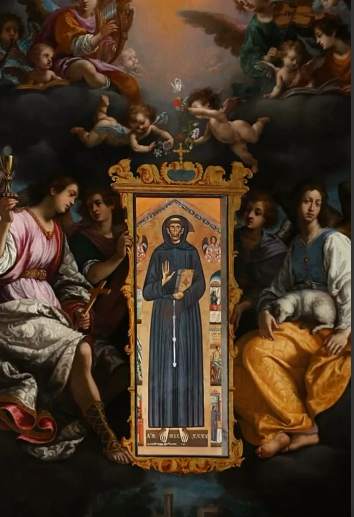
In the second chapel (16th century), now dedicated to the fallen of World War I, highly valuable works are on display. These include a 14th-century statue of the Virgin and Child, which reportedly showed miraculous signs in 1506, as well as a copy of a Pietà by Alessandro Bardelli (originally by Ludovico Cardi, known as il Cigoli). Bardelli also created the "cover" that once concealed the famous panel of St. Francis by Bonaventura Berlinghieri . -(learn more)
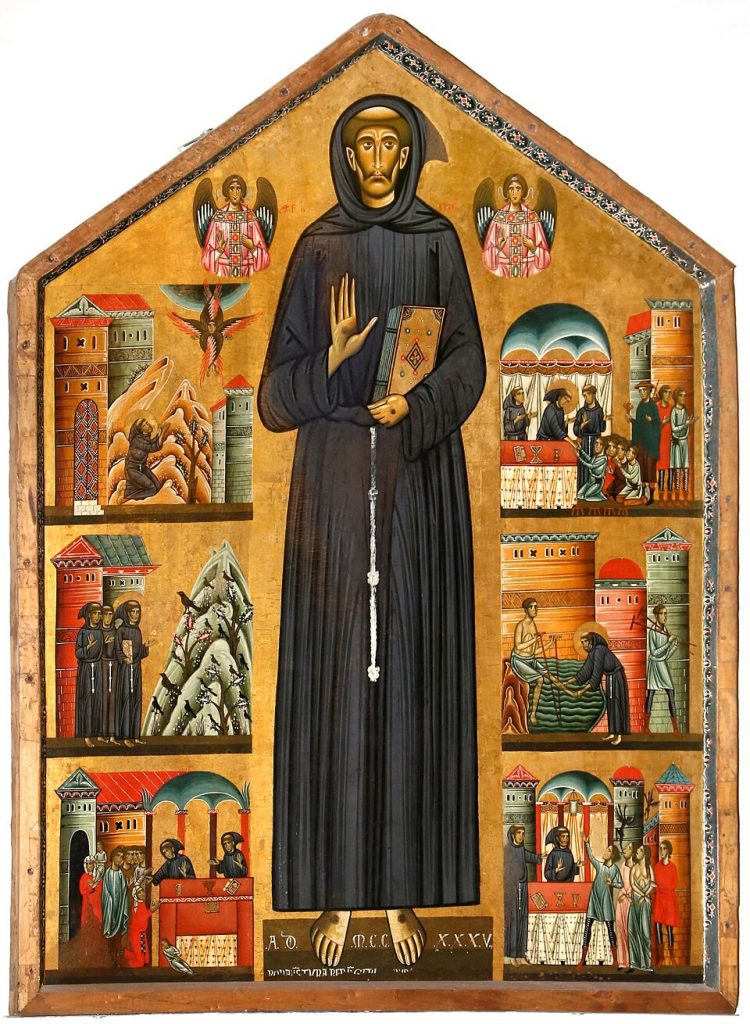
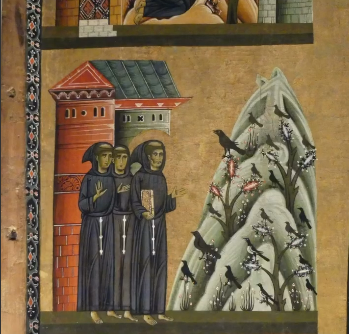
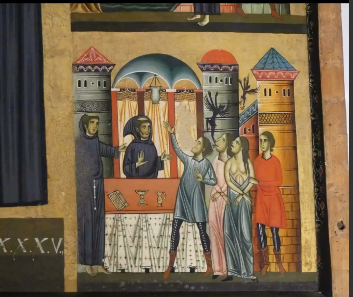
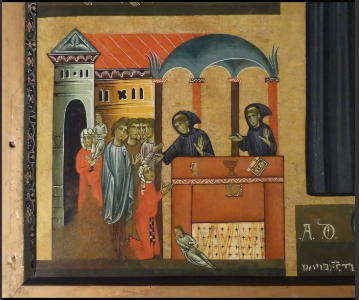
The best-known pictorial work found in the church of San Francesco is precisely the panel by Bonaventura Berlinghieri from Lucca which illustrates St. Francis with six stories on the sides. The painting from 1235 has been restored several times; it was in fact rediscovered entirely in the mid-nineteenth century.
Located on the Mainardi altar is the most significant pictorial work, perhaps the oldest, which depicts Saint Francis of Assisi and the stories of his life. The panel was painted by Bonaventura Berlinghieri in 1235, nine years after Francesco's death, and has been restored several times; it was in fact fully rediscovered only in the mid-nineteenth century. It is said that Bonaventura had known him and therefore was able to bring back the right appearance.
In 1211 the Saint was hosted by the important Orlandi family who donated him land in the area outside the walls called Il Prato, where the Franciscan Center would later develop. For about two centuries, however, the panel was framed by a canvas, Glory of Angels, created by the seventeenth-century Uzzanese painter Alessandro Bardelli, and only in the 1880s was it removed, thanks to the painter and art critic Michele Ridolfi, thus revealing the date, signature and some scenes from the life of the Saint.
In this way the work became an object of study and admiration, so much so that it was exhibited in 2023 at the Diocesan Museum of Freising in Bavaria.
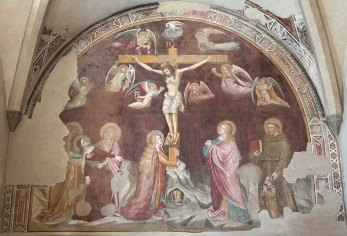
In the sacristy of the Church of San Francesco, almost hidden, there is affresco from the 14th century, attributed to Puccio Capanna, a painter born in Assisi and, according to what Vasari reported, a pupil of Giotto's workshop.
This is the Crucifixion with Angels and Saints, a work restored in the 1970s. The lunette, approximately 3 x 4 metres, shows the crucified Christ; at his feet are depicted the Virgin Mary supported by the Pious Women, the Magdalene, Saint John the Evangelist, Saint Francis (owner of the church) with the devout secretary and confessor Friar Leo. One of the Angels collects the blood that flows from the side, while the pelican feeds its young with blood, symbol of the love of Jesus. Under the cross there is the skull, which recalls the temporariness of life and symbolizes the redemption of humanity from original sin thanks to the death of Christ.